Waste You Can Clean With
Lemon Vinegar All-Purpose Cleaner
Simple, effective, inexpensive, and beautiful. This low-effort home keeping system is something we'll never go back from.
The System
Every lemon in your kitchen has multiple lives before composting. After zesting and juicing, those spent rinds become the foundation for our most-used daily cleaner.
The Process:
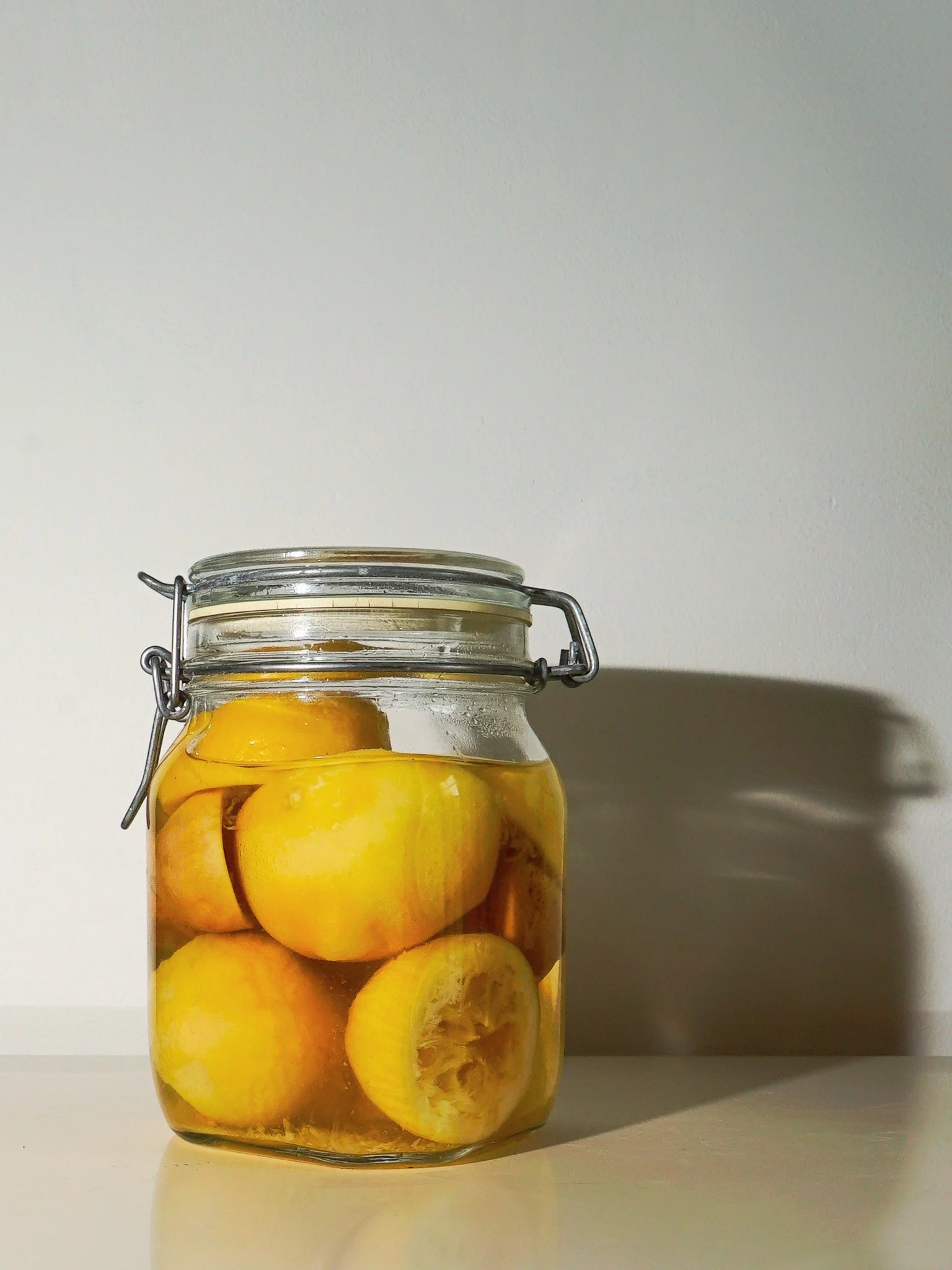
Place spent lemon rinds in a glass jar
Cover completely with white vinegar
Let sit in a sunny window for two weeks, shaking occasionally
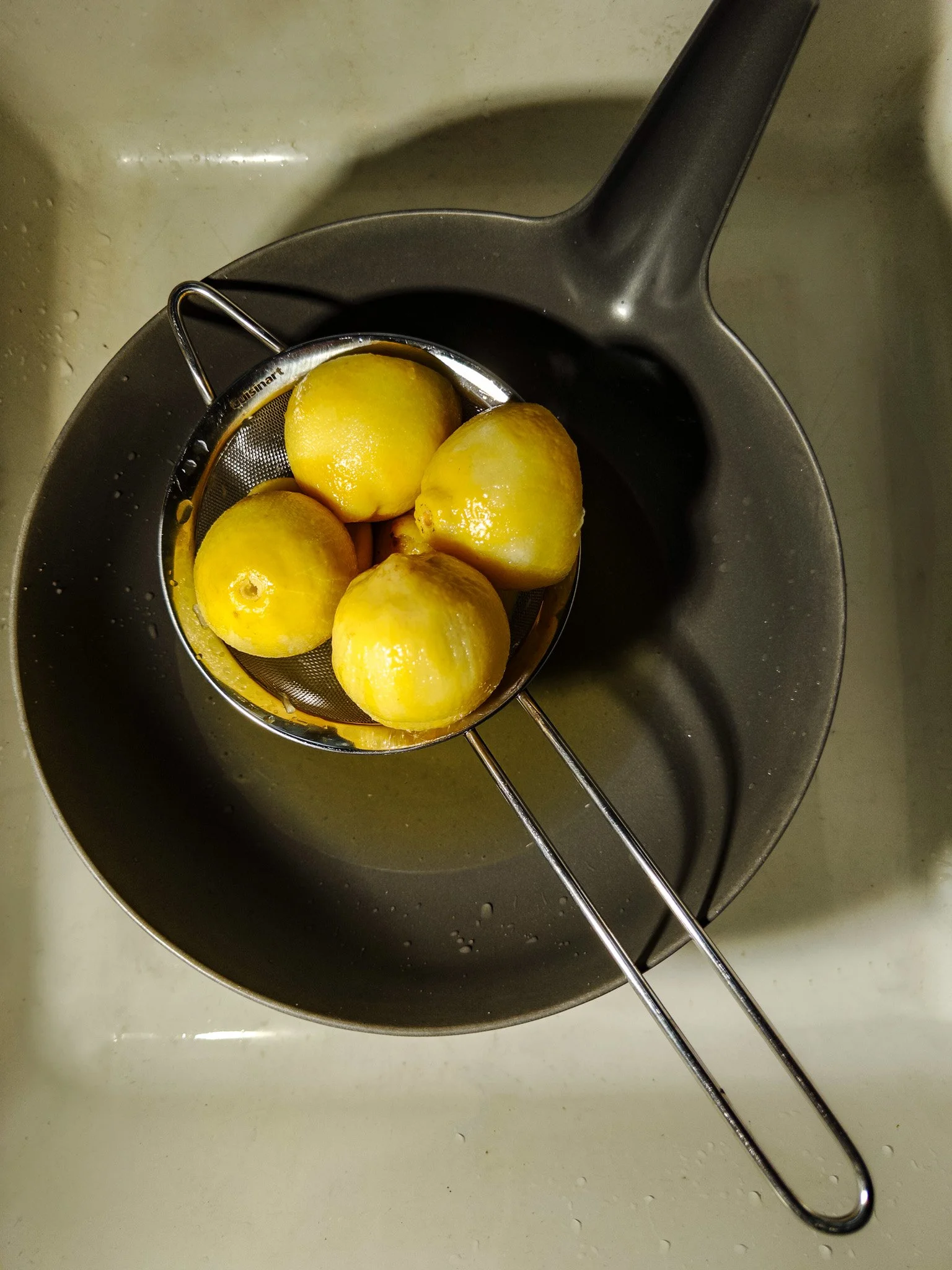
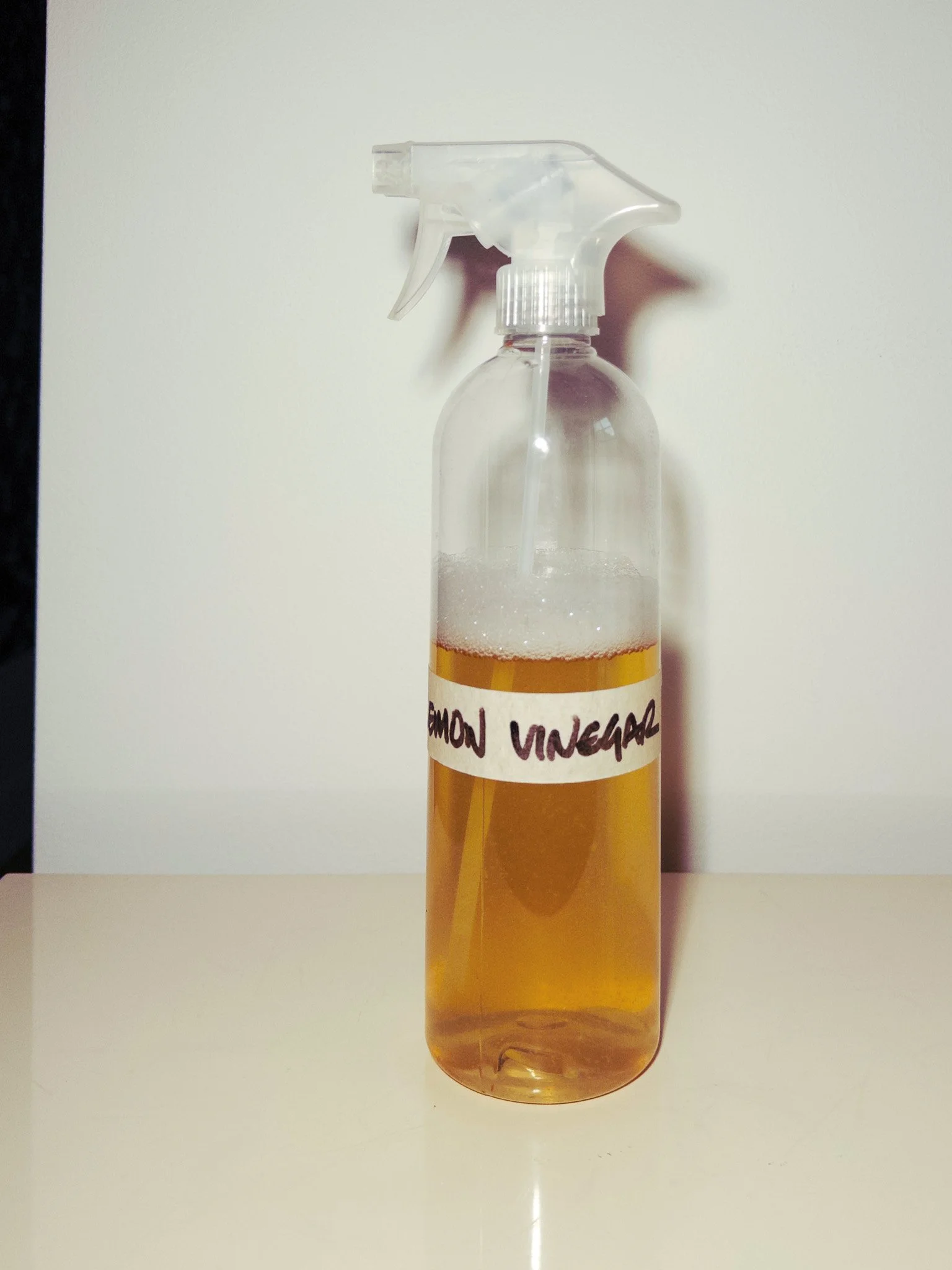
Strain out the lemons, refill your spray bottle
Compost the spent fruit
Why This Works
Beyond the obvious benefits—non-toxic, cost-effective, plastic reduction—this system transforms food waste into household necessity. The natural oils in citrus peels create an effective degreaser while the vinegar handles disinfection. The result cleans as well as commercial products while smelling infinitely better IMHO. This glass jar method also means you're regularly cycling through fresh cleaner, using what you have on hand for other reasons - lemons, and creating less waste in multiple categories simultaneously.
Recommended supplies:
Glass canning jars with tight-fitting lids. We love these Le Parfait ones.
White vinegar, we buy this vinegar in bulk so it’s always on hand.
Glass spray bottles for daily use (we are reusing a plastic one from a past cleaner but glass is ideal) we like these two from Grove Co & Thrive Market
Fine mesh strainer we use this Cuisinart set we also use these in the rest of our home inexpensive and they’ve lasted a decade so far.
Citrus Banking Tip
Before juicing any citrus, zest or pull strips from the rind even if your recipe doesn't call for it. Use immediately, refrigerate for up to a week, or freeze for year-round access. Citrus peels freeze beautifully—giving you garnishes for winter spritzes, salad finishes, and dessert accents without the last-minute prep work.
We maintain a freezer library of key lime, paloma, blood orange, and Meyer lemon peels, ensuring access to these flavor profiles even when they're out of season.
-
This story was developed and photographed in the Hudson Valley on the traditional and unceded territories of the Mohican, Munsee Lenape, and Esopus peoples, who have been stewards of these lands since time immemorial.
-
We develop and adapt our recipes and ideas using ingredients and tools we grow, purchase and test ourselves. We occasionally evaluate products offered to us, with editorial decisions guided by our standards, not commercial considerations. Some links may generate commissions, but our recommendations stem from authentic experience and editorial conviction.