
Dispatch 004

It's bridge season where one day feels like summer and the next winter in the northern hemisphere or visa versa if you're in the southern hemisphere—the short windows each year where you feel Mother Nature not because she's screaming but because she's moving from one place to another.
Fall is fully upon us in the North with winter looming. Preservation is urgent, and in the South we're seeing the bubbles of life coming into bloom. It's fascinating when you think about both at once and how they're opposite but reassuringly flowing off of each other.
What's Inside
Food — Last-of-summer corn chowder, Japanese sweet potato salad, cauliflower larder prep, plus why James Dyson's strawberry farm reveals something important about the future of food.
Style — Preowned luxury cashmere and merino from Loewe, Stella McCartney, Khaite, Bottega Veneta. Sheep Inc.'s regeneratively grown sweaters. Building wardrobes that last.
Culture — Nicholas Thompson on tech, media, and the questions worth asking about where technology is taking us. Misan Harriman on bearing witness through his lens. Ten YouTube channels democratizing art world access. Plus an evening escape worth your time.
Up Next
New CANAVA Stays from the US, Europe, and Mexico. Guides from the US, Africa, and Mexico. We're working on our first recipe collection—six months of recipes, techniques, and shopping guidance published as a reference designed for your kitchen. Some you've seen, some brand new to members first. Twice-yearly editions that make discovery easier when you're planning meals or hosting. More new in-season recipes and preservation techniques. Brand rating guides across home, food, pet, wellness, and fashion. Home system deep dives. And launches from brands building what comes next.


In Season


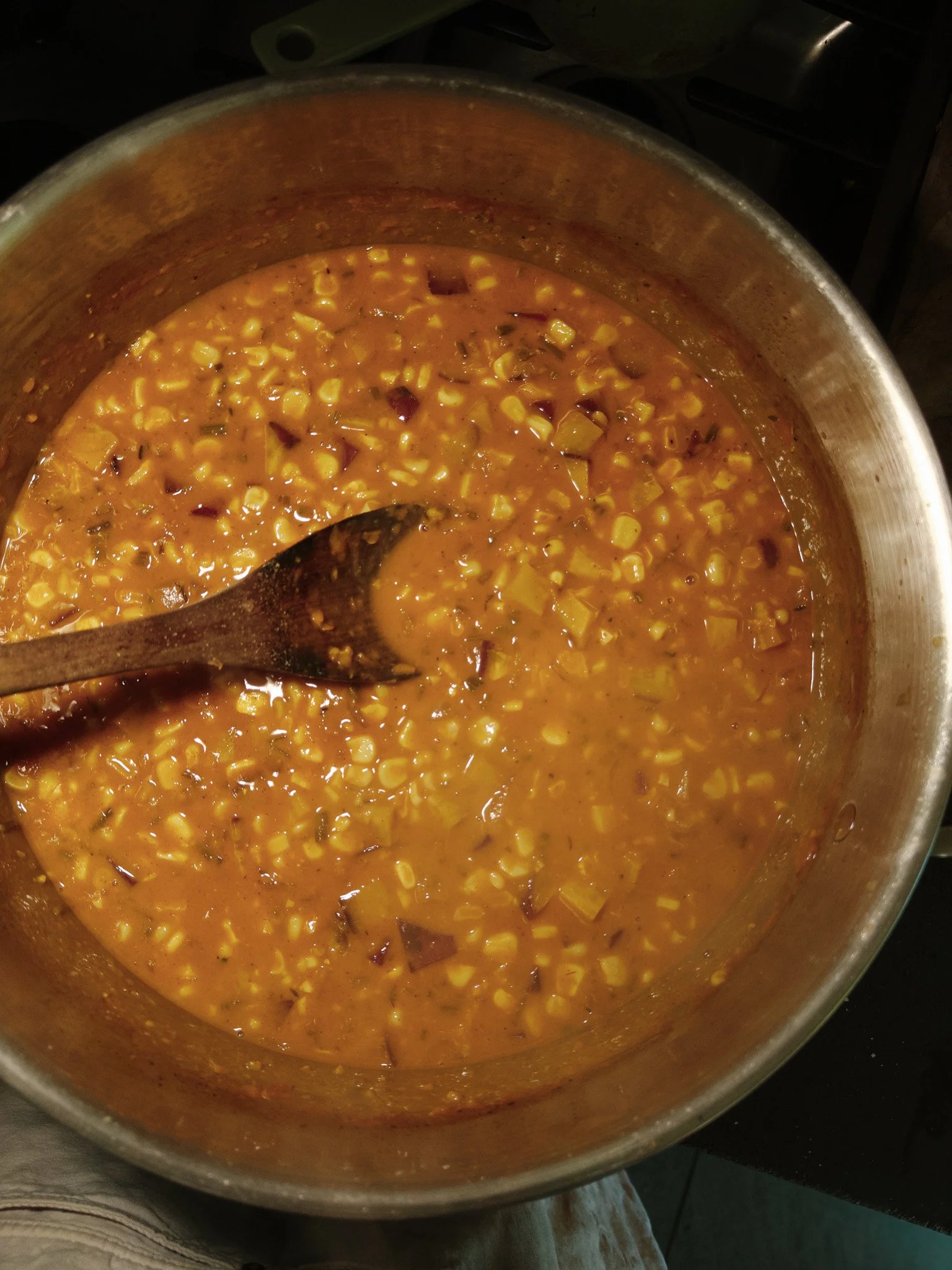


Golden Hour Smoky Vegan Corn Chowder
Tap into the very last bits of summer corn to make this insanely craveable deeply nutritious smoky slightly spicy sometimes sweet (those perfectly cooked bits of potato), protein rich– 18g, fiber rich 12g VEGAN texture rich soup. 18g, fiber rich 12g VEGAN texture rich soup. 18g, fiber rich 12g VEGAN texture rich soup. Tap into the very last bits of summer corn to make this insanely craveable deeply nutritious slightly smoky soup. Frozen corn is a great option here - pick sweet white and have this all winter long.

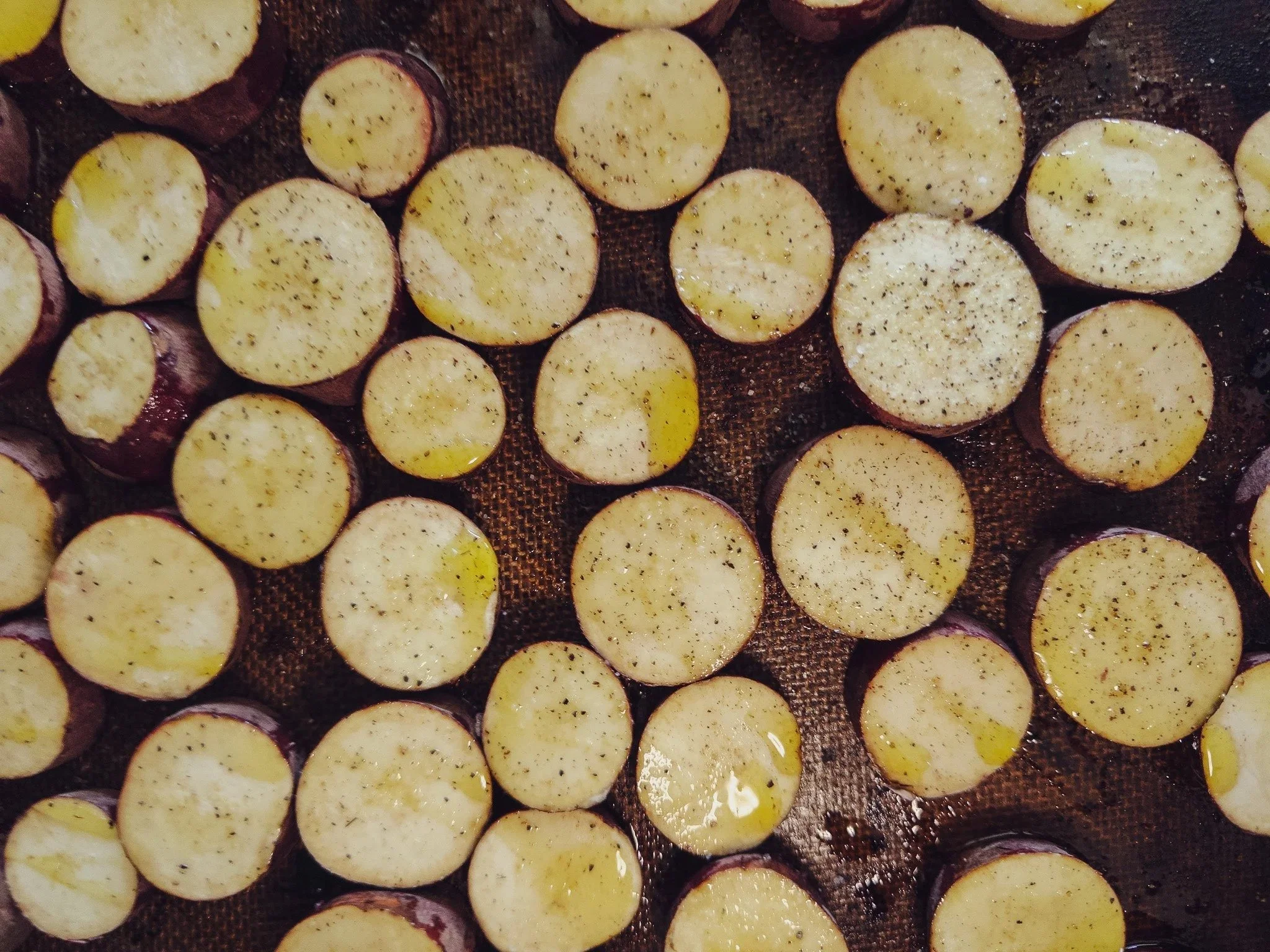
Crispy Creamy Miso Japanese Sweet Potatoes
Plot twist: potato salad can be SEXY. Caramelized Japanese sweet potatoes meet honey-yuzu miso drizzle and pickled shallots in a warm tangle that's part comfort food, part WTF, and all packed with nutrition and flavor that will call you back again and again.
METRICS (per serving) — 4g protein | 7g fiber | 7 plants
Larder Prep
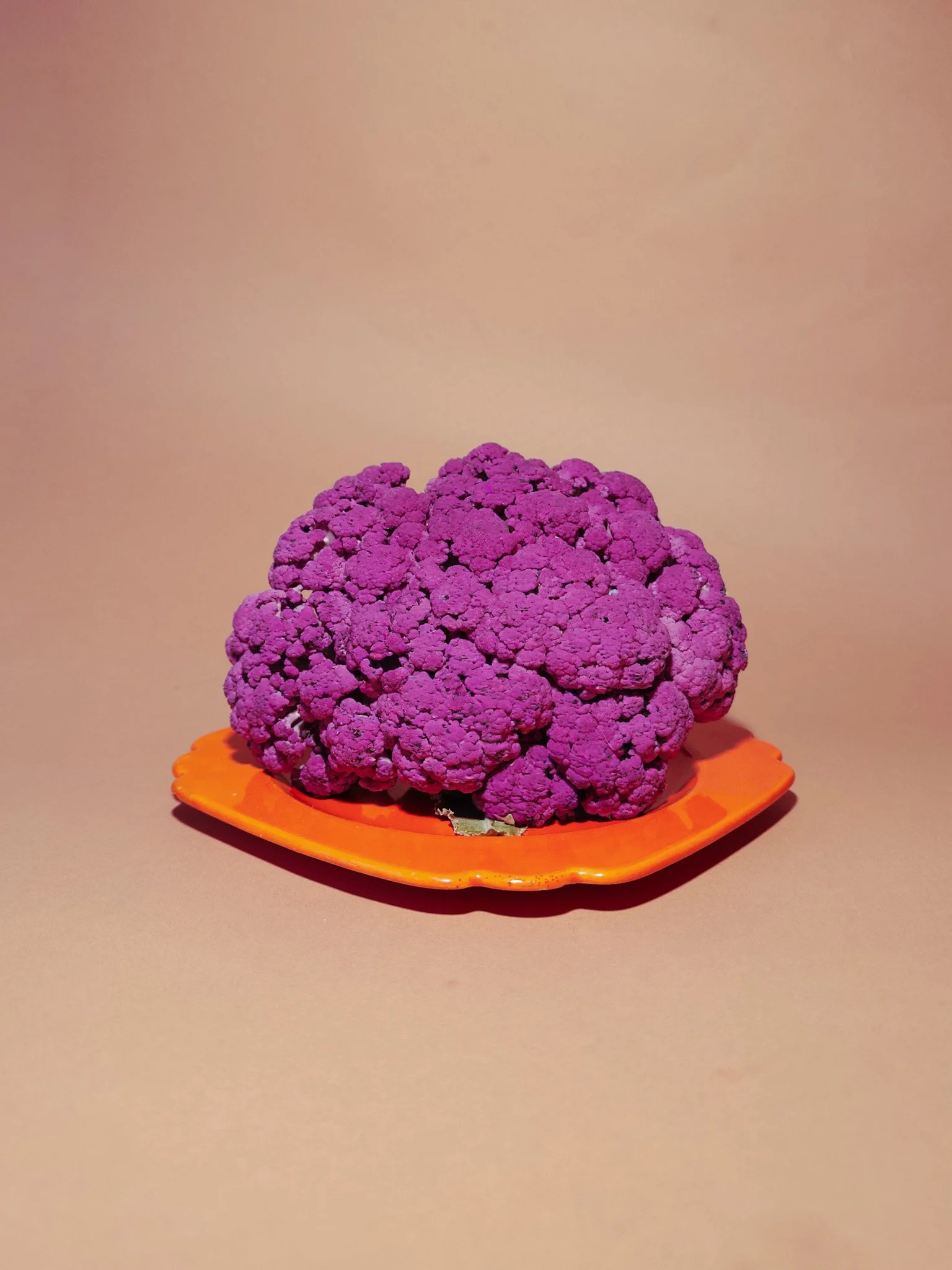
There's little reason to buy "cauliflower rice" premade. Whenever cauliflower is in season at the farmers market we stock up and process so we've got the base on hand for cauliflower rice, pureed cauliflower, and adding an extra high-nutrient, high-fiber veg to sautés and soups year round. We rotate orange (25x more vitamin A), purple (loaded with heart-healthy anthocyanins), and white (vitamin C powerhouse) in 225g (8oz) portions that we seal with our Anova Vac Sealer using plant-based biodegradable bags (these are a good sub for ours). We snip a tiny release valve in the bag before sealing so contents can be "fluffed" before freezing. Compostic 100% compostable zipper bags work well if you haven't taken the vac sealer dive yet. This whole exercise takes about 10 minutes start to finish.
The economics work: One organic whole cauliflower at the farmers market (5.00) yields four 225g (8oz) portions plus extra for tempura—about 1.25 per serving versus 3.50 for a single 10oz bag of processed white cauliflower rice at retail. Orange and purple aren't even available frozen commercially, making fresh processing the only way to secure these nutrient-dense varieties year round.

Montgomery Place Orchards Golden Cauliflower
METRICS (per 225g/8oz serving) — 3g protein |
3g fiber (10% DV) | 25 calories |
77% DV vitamin C | 20% DV vitamin K




Day One
Day Three
LACTO FERMENT
Long Season Farms Purple cauliflower spicy ginger garlic. Purple cauliflower spicy ginger garlic. Purple cauliflower spicy ginger garlic. Purple cauliflower spicy ginger.
Strawberries and Blow Dryers
As we dive into the world of global food production and how it can change, we were shocked to learn that James Dyson and his teams have been farming 36,000 acres across Lincolnshire, Oxfordshire, and Gloucestershire for over a decade. Yes, the vacuum and blow dryer Dyson. Their work reveals something important about how we might feed ourselves going forward. Their 26-acre glasshouse in Carrington runs on renewable electricity and surplus heat from an adjacent anaerobic digester, turning crop waste into energy that powers the operation and heats the glasshouse year-round. Rainwater collected from the roof irrigates 1,225,000 strawberry plants, and the digestate from the digester goes back onto nearby fields as organic fertilizer. The infrastructure closes actual loops, regenerating existing farmland while integrating new thinking about taste, scale, and nutrition.
What started as an exploration of how to extend Britain's strawberry season (normally just a few months) has become year-round production of over 1,250 tonnes annually. Giant Dyson-developed rotating wheels maximize natural light exposure, UV robots eliminate mold without chemicals, and beneficial insects control pests naturally. The newest trials boosted yields by 250% while improving fruit quality. This isn't about maximizing immediate extraction—it's about proving we can grow genuinely delicious, nutrient-dense food at scale without treating soil, energy, or water as disposable.
Curious and in the UK? You can stay on the farm and see how it works yourself. Transparency isn't common in industrial agriculture, and the openness here signals something different: confidence that the methods can withstand scrutiny because they're built to last, not just produce a quarterly result.
Watch these videos and visit their site for more expansive stories and to keep up as they continue to innovate. Moving fast and fixing things by tying innovation and technology to land is a truly exciting ecosystem that could be repeated globally.


The Edit
Luxury cashmere and merino from the world's best mills and designer brands—Loewe, Stella McCartney, Khaite, Bottega Veneta, Brunello Cucinelli, Loro Piana, Begg & Co, and &Daughter. All preowned, expertly graded, radical value. We combed the "racks," edited the care tools, considered resale strategy—delivering a pathway to building a wardrobe of your dreams that lasts while knowing you're considering value and impact at every step.
Art and Media
Open to the public and free with a ticket (reserve yours below). We'll dive into both The Hotel Chelsea and gallerist David Zwirner's direct-to-consumer online art marketplace Platform later this week. For now, hold your spot and take in a tight edit of independent galleries and lesser-known artists—a deliberate counter to the big art fair circuit.
The Breuer Building is worth visiting on its own merits—now it's filled with extraordinary art and culture again, and it's free seven days a week. Sotheby's has moved into this longtime vessel for creative expression. The building itself is part of why we love New York and our own family story. More importantly, you should benefit from access to valuable cultural resources when you can, without adding to problematic systems. This is that opportunity: take in the art, experience the space, celebrate what's there.
Auction houses operate within wealth-serving infrastructures and feed the tax evasion art trades—that's worth acknowledging. For now, while we work to unpack the bigger equation, we're focusing on the access and the experience. Go see it and take from the system set up to benefit those playing the game. Watch the film above to see how Herzog & de Meuron refreshed Marcel Breuer's groundbreaking brutalist building—we loved seeing the evolution.
Nicholas Thompson - Tech for the People

The rare tech journalist who understands that technology isn't separate from culture — it is culture.
As CEO of The Atlantic, Thompson leads one of the few remaining legacy publications willing to tell hard truths. His real value shows up in The Atlantic's productions: "The Most Interesting Thing in AI" podcast and "The Most Interesting Thing in Tech" — off-the-cuff LinkedIn videos capturing what's happening right now.
Thompson treats AI and tech as civilization stories. He asks the right questions: not just what's possible, but what's worth building. Not just who's winning, but who's paying the cost. He understands that the future is being built right now by specific people making specific choices.
His background at Wired and The New Yorker shows in how he connects dots most tech journalists miss. And critically, he's not afraid to name what's broken even when it means calling out the powerful.
This is who we listen to when we need to understand where technology is taking us — and whether we should actually be going there.
Watch: Is Creativity Dead? The Answer — insights on the intersection of AI and creativity from AIR's Climate Week conference
Listen: The Most Interesting Thing in AI
Follow: "The Most Interesting Thing in Tech" on LinkedIn
Bearing Witness Through His Lens–Misan Harriman
Our Media Diet: Art features Carrie Scott — the art historian and curator democratizing access to the art world through her platform Seen. Her podcast extends that work, creating space for conversations about how art intersects with culture, identity, and the questions shaping our time.
This conversation with Misan Harriman will feed your soul and open your eyes.
A brave artist unwilling to look away from the moment we're in — Harriman documents the movements, the people, and the truths that will shape how we understand this era. His lens connects art to life, beauty to justice, personal vision to collective responsibility.
Through Scott and Harriman's exchange, you'll see why certain images resonate beyond trends. Why documentation can be activism. Why the artists shaping our visual language are building the record of now.
This is a conversation we encourage you to make time for: substantial, thoughtful, and willing to connect what we look at to who we're becoming.
Watch: [Seen Podcast with Misan Harriman](YouTube link)
Listen: Seen on Apple Podcasts
Follow Misan: @misanharriman | misanharriman.com
More on Carrie: CANAVA Media Diet: Art

Media Diet: Art—Behind the Scenes
Art shapes how we see, think, and move through the world. But the art world has long protected its inner workings—gatekeeping access to the conversations, spaces, and knowledge that make art meaningful beyond market value.
These ten YouTube channels pull back the curtain. Museum curators walking you through collections. Artists opening their studios. Experts unpacking the stories behind iconic works. Auction house insights without the pretense. Gallery visits that demystify rather than intimidate.
In extraordinary times, understanding how art reflects, challenges, and documents our moment matters. These channels make that understanding accessible—no cost to enter these once-rarified rooms. Access is limited only by your curiosity.
Start with the museums—Louisiana, MoMA, Tate—then dive into the deep stack of artists telling their own stories with Art21. From there, explore the galleries and auction houses. Each channel offers a different lens into how art gets made, shown, sold, and understood.
-
The world's largest original archive on contemporary art and our personal favorite spot on the internet when we want to immerse ourselves in art. Supported by the Danish museum Louisiana, a place worth the trip all the way to Denmark just to see. Since 2012, the museum has been sharing videos featuring artists, writers, musicians, and architects in deep conversation—tap in whenever you want, when you need inspiration and access to a connected world. Their "Advice to the Young" series alone is worth your time—think of it as "office hours" with some of the most talented thinkers of our time. Louisiana goes beyond art to literature, music, and design, creating a cultural platform that makes the world better.
-
PACE GALLERY
One of the world’s mega-galleries sharing what they know. Studio visits with represented artists. Installation videos showing how major works come together. Conversations with collectors and curators. Pace has access to artists at the highest levels of the market, and they’re generous with that access on YouTube.

-
New York's Museum of Modern Art brings world-class institutional authority without a hint of stuffiness. Their "Artist Profiles" series gets you close to artists like Kerry James Marshall in their own spaces. They also offer practical tutorials on techniques like watercolor and collage. Their YouTube channel excels at showing you what happens behind the scenes—conservators finding hidden brushstrokes, art handlers installing massive sculptures, curators explaining choices. Museum access without the crowds, from anywhere, anytime.

-
KÖNIG GALERIE
Berlin-based gallery bringing Euro focused perspective to contemporary art. Their channel documents exhibitions, artist talks, and the cultural context that makes Berlin a creative capital. König represents a mix of established and emerging artists, and their videos reflect that range. Good for understanding how the European gallery system differs from New York’s market dominance.

-
Britain's Tate museums (Modern, Britain, Liverpool, St Ives) produce content defined by originality. Yes, there are artist profiles not unlike many museum channels, but these consistently surprise—pairing drag performers with art historians to discuss dandyism, filming dance groups with learning disabilities performing in the galleries. Their TateShots documentary series ranges from studio visits to unexpected cultural conversations. The channel proves museums can be genuinely creative, not just educational. If you're in London, find your way to some of their in-person programming—it's best in class and accessible to everyone.

-
DAVID ZWIRNER
Possibly THE mega-gallery (New York, London, Hong Kong, Paris) using YouTube to extend their reach. Exhibition walkthroughs, artist interviews, and insights into how major galleries operate globally. Zwirner represents artists like Yayoi Kusama and Kerry James Marshall—this channel shows you how those relationships work. Market power made slightly more visible, with access to artists driving culture across generations.
A note on the institutions:
The art world—museums, mega-galleries, art fairs, and auction houses—operates within systems designed to serve wealth and power. From opaque donor relationships and tax schemes to market manipulation and gatekeeping, these institutions often prioritize the richest collectors over artists and the public. We include these channels not to endorse the system, but because understanding how it works is empowering. We believe knowledge is the first step toward navigating how you support and celebrate the world of art and artists.

-
The nonprofit gold standard for contemporary artist storytelling. Their mission is simple: let artists speak for themselves. Simply artists in their studios talking about their work, their process, their challenges. The Peabody Award-winning PBS series "Art in the Twenty-First Century" has been running since 2001, profiling hundreds of artists. Art21 also produces "Extended Play," the longest-running digital series on contemporary artists. Catch the recent episode on Lucy Craven amazing American artist and friend of CANAVA, and "New York Close Up," profiling early-career artists in New York. Art21 brings you as close to working artists as you can get without being in the room—an independent nonprofit whose mission is to inspire a more creative world through the works and words of contemporary artists.

-
White Cube
London-based international gallery (also Hong Kong and Seoul) known for museum-quality presentations. Their YouTube channel extends that ambition—polished videos featuring their roster of contemporary artists, exhibition documentation, and talks. White Cube represents major figures like Theaster Gates and Tracey Emin. This channel shows you what galleries can be when they think like museums.

-
The art fair market game has become something that's challenging to support without asking a lot of questions about its extractive, opaque tactics and the role they play in tax evasion, market manipulation, and a lack of care for the sector they benefit from. Chatter among the influential in art is constant and quickly evolving. Considering all of that, we still recommend this channel for its unique access into a still-thriving part of the art world. Panel discussions from Basel, Miami, and Hong Kong fairs. Artists in their studios. Collectors in their homes. This channel gives you access to conversations that shape the art world—who's buying, who's showing, what's valued. If you want to understand how the market works, this is still a big part of that.

-
CHRISTIE'S
The 250-year-old auction house as a window into how art becomes property. Behind-the-scenes looks at major auctions, specialist insights into collecting categories, and explanations of how valuations work. Christie's has sold some of the most expensive artworks in history—this channel demystifies that process. Essential viewing if you want to understand the mechanics of the art market. Keep in mind it's a questionable business model—currently owned by French billionaire François Pinault, with ongoing AI art controversies involving copyright theft, Nazi-looted art restitution battles, and a history of price-fixing scandals. The chatter has been particularly loud over the past year.
Film

Bugonia.
Emma, Jesse, Yorgos. Weird, wonderful, and worth seeing in a theater on the big screen. Without giving anything away, you'll be thinking about everything we founded CANAVA for—the systems in play, the pace of attempted fixes for the planet and people. But you'll also appreciate being in public because you're going to laugh at things that are bizarre and maybe not actually funny. Being in community helps process that experience.
Thank you to the friend who organized us seeing this on the big screen—sometimes you just need to sit in the dark and laugh at the absurdity of it all.
Who’s Here? And Who’s Listening?– an exploration of messaging apps

We all message constantly — friends, work, the group chat that somehow keeps you sane in the middle of the chaos we’re facing. We’ve done some diving into who does what and who allows what and it’s been muddy but Mozilla Foundation’s new platform Nothing Personal and their independent privacy reviews you can find our more than you ever wanted to know about these apps: privacy, ethics, supply chain, or convenience. We hope this set of tools helps you choose what aligns with your needs and tolerance level — we think knowing who’s listening is half the work and who they’re providing cover for is the other half.
Our Take - we use iMessage because for us Signals winning privacy metric while attractive isn’t enough to offset the nefarious actors they allow to be shielded from sight. The bad actors and their intentions who are shielded from acountalbity hold us back from using the app and we avoid WhatsApp at all costs because well don’t trust Meta with your data if you can help it.
iMessage
Owned by Apple. Built inside a closed ecosystem but still held to visible standards for human rights and accountability. Encryption with an ethical baseline.

Signal
Owned by Signal Foundation. A nonprofit built on radical privacy. Keeps your data safe — but also shields everyone, good or bad. A tool with integrity, not guardrails.
Owned by Meta. Convenient, connected, and costly in all the ways that matter. Data is the product, and you’re part of the inventory.


Member Benefits

Dispatch-002
Dispatch-003

CANAVA–Stays

The brand built on "radical transparency" just sold to Shein for less than the debt it carried. The press is calling it ironic. It wasn't. This end was a feature of the financial model from day one. Follow the money.