Another T-shirt?

As you read this, over four billion people are likely wearing a t-shirt—that’s half the humans on earth. Not because a t-shirt was the only option, but because it’s one of the most universal, functional, and accessible garments on the planet. You’re part of that. So is the artist in her studio, the CEO wearing one under his suit, the runner on his morning loop, the kid at the skatepark, the farmer in the fields. T-shirts aren’t just clothing; they’re memory keepers, identity markers, and cultural shorthand—they are global, beyond any existing border.
The scale of what we need to understand about t-shirts to make better choices can feel overwhelming. But we are not about being overwhelmed. We are about getting up to speed, quickly, so we can make smarter decisions that actually create change. Here at CANAVA, we think about t-shirts a lot. How they’re made, where they go, and what they mean. Because we can see the scale of the system and the ubiquity of them, we see astonishing opportunities to do things better—and catalyst positive change.
What You Need to Know
This system wasn’t designed to be transparent. The way t-shirts move around the world is intentionally complex—an intricate web of trade agreements, offshored labor, and hidden environmental costs.
Here’s an example of what happens every single day:
A U.S. cotton farm produces bales that are sent to a textile mill overseas—often to countries like Mexico, Honduras, or China. There, the cotton is spun into yarn and then sent to a separate facility for dyeing and finishing, where massive amounts of water, energy, and chemicals are used to achieve the desired color and texture. Then, the dyed fabric is shipped to a garment factory in Nicaragua, Bangladesh, or Vietnam, where workers cut and sew it into a t-shirt.
Then the global system of logistics takes over—garments are shipped across the world, likely traveling thousands of miles before reaching the warehouse where they’ll be stocked and sold. Once a t-shirt is worn, washed, and discarded, many make their way into the secondhand trade—often shipped back to the Global South and developing nations, where they overwhelm local markets, disrupt economies, are burned, or end up in landfills.
This system has been built for speed, scale, and above all, profit. While the logistics are impressive, fairness was never the goal. Reports indicate we have enough clothing for six generations. And yet, the machine keeps running, convincing us that more is necessary.
What is the global market anyway?
2024 Global Market Size: $74.65 billion
Annual Production: 15 billion t-shirts
Top Exporters:
China: $37.8 billion
Bangladesh: $9.1 billion
Germany: $7.4 billion
Vietnam: $6.3 billion
Türkiye: $5.8 billion
Top Importers:
United States: $9.3 billion
Germany: $4.8 billion
France: $2.7 billion
U.S. Annual Consumption: 8.3 t-shirts per person—far exceeding the global average of two per person, meaning Americans consume roughly four times more than most of the rest of the world.
Water Used for One Cotton T-Shirt: ~2,700 liters—the amount one person drinks in 2.5 years
Dyeing & Finishing Impact: One of the most resource-intensive and polluting steps, accounting for 20% of global industrial water pollution
Human Impact: Cotton provides at least part of the income for 300 million people globally—nearly 7% of the labor force in developing countries depends on this single crop.
State of the Sector
The modern t-shirt supply chain isn’t broken—it’s working exactly as designed. Optimized for profit, not people. The brands in this space aren’t making better products; they’re making better margins.
This isn’t just about fast fashion. It’s big box. It’s vertical brands. It’s merch. It’s the “ethical” brands started by finance guys who saw a market opportunity, not a long-term solution.
If you’re thinking, just tell me what to do, that’s up next. If you want to understand more, keep reading—we’ll keep asking (and answering) the bigger questions.
The Best T-Shirt is One That Already Exists.
Buying secondhand, vintage, deadstock, or upcycled t-shirts is always the best move. The lowest-impact t-shirt is the one that doesn’t require new materials, energy, or water to be produced. Here is our shortlist of where to find the best of what already exists:
Open Air MarketsROSE BOWL FLEA MARKET
One of the best & most well known markets in the world. Second Sunday of every month rain or shine in Pasadena.
LONG BEACH ANTIQUE MARKET
A somewhat hidden gem, miles of booths with less attention than Rose Bowl there’s often great finds to be had. Third Sunday each month.
Online Vintage ShopsKELLY COLE VINTAGE
Kelly and team have been top of the vintage T-shirt game for decades in Los Angeles.
INTRAMURAL
A super edit by founder Bijan Shahvali who advises brands you love. This edit of T-shirts & more is 🔥.
ELLIE MAE
Cool Toronto brand that stocks a fantastic vintage tee (and more) edit alongside their core collection.
KISSING BOOTH
A group of friends who just happen to be vintage experts editing utility impeccably.
ETSY
Think of this as a gigantic vintage warehouse with lots of individual stalls. A favorite is The Captains Vintage
EBAY
The OG for online hunting. Patience & skill with search words play a big part here but gems & deals abound.
THE REAL REAL
Get your brand list ready. There are great deals & great finds but you will need to check in on the regular.
GRAILED
More great Men’s than other resale outlets, and a high fashion edit that’s worth hunting through.
The Next Best Option Is One You’ll Keep.
When you do buy new, choose something you'll wear in a year, a decade, maybe even pass down.
Our shortlist of brands making t-shirts worth adding to your life (including our own):
Brands for new t-shirtsANOTHER TOMORROW
Founded with impact at the center of this luxury brand, their tees are a splurge but they are fantastic and worth it. Complete to soil transparency, a resale program and more make this a brand to support and collect.
IMOGENE & WILLIE
Core offerings & a deep collection of graphic t-shirts that are instant classics. Small batch - all US produced with complete transparency brand wide. They have a robust recycling & repair program for their denim too.
MATE THE LABEL
Founder owned and run. Producing a wealth of what you want out of organic fiber, sewn locally, plastic free, take back program and transparency. This brand ticks all the boxes for adults and children across your whole life.
KOWTOW
This is an impressive brand, style, substance & a soul. Regenerative, circular, transparent & full of things you want to wear. It’s almost hard to believe they exist. Mid range pricing. So much to love. Adults run don’t walk.
BUCK MASON
They are spinning yarn, weaving & making a USA vertical capsule of Tee’s that are a bright spot for men. While a lot of what they do is still imported and produced more conventionally - this carve out is good.
CANAVA
While we are now a membership platform for impact living at our core, we still make wonderful apparel. Impact is why we started and why we expanded. T-shirts are plastic free, nearshore, designed to be keepers.
How We Evaluate Brands
No brand is perfect, but many are doing meaningful work. Here’s how we decide who makes our list:
Material Matters: Are they using organic, regenerative, recycled, or lower-impact fibers? Are they reducing plastic use?
Labor & Ethics: Do they pay fair wages? Are they transparent about their supply chain? Are they certified by independent third parties?
Production Practices: Are they minimizing waste? Using non-toxic dyes? Reducing water and energy use? How far does everything travel as it’s being made?
Longevity & Circularity: Are they making quality products that last? Do they offer repair programs, resale, or take-back initiatives?
Corporate Intent: Who owns the brand? Is it built for long-term impact or just another VC-backed scale-to-exit model?
Why aren’t there any $5 new options? Because there is no such thing as a $5 new t-shirt. Someone is paying the difference, and it’s usually a worker in the Global South.
Simple Care Tips That Make a Big Difference
Simply air drying a t-shirt can save 1/3 of its carbon footprint over its lifetime
Wash less, spot clean more: Most t-shirts don’t need washing after every wear. Spot cleaning extends life and saves approximately 500 gallons of water annually per person.
Skip the dryer sheet: They coat fabrics with chemicals that break down fibers over time. Instead, add 1/4 cup of white vinegar to your rinse cycle as a natural fabric softener that helps preserve colors.
Let’s Get Personal: The Stories We Wear
T-shirts are autobiography in cotton. I’ll show you mine if you show me yours—these are the t-shirts that have earned their forever place in my life.
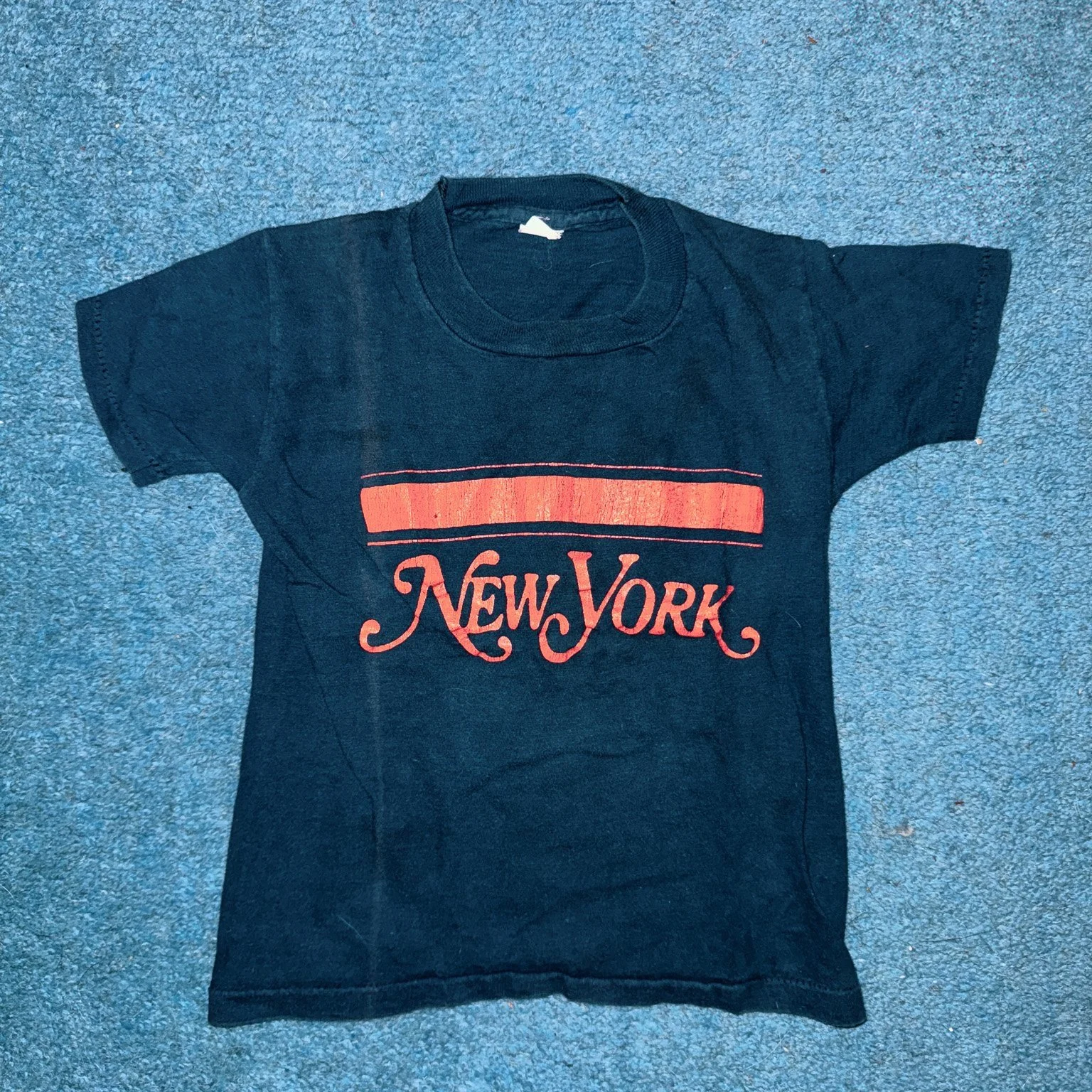
That striped Acne Studios tee from 2017 that’s still in my rotation. The vintage New York souvenir from a childhood visit to see my dad that’s somehow survived four decades. The “Buy Art Not Cocaine” statement piece I found secondhand on eBay that has been worn to death but refuses to be discarded.
These aren’t just garments—they’re artifacts of lived experience. They carry the weight of memories, mark periods of our lives, and become physical emblems of our values. When I talk about the impact of t-shirts, I’m not just discussing environmental footprints or labor conditions—I’m talking about the stories we choose to carry with us. This is why longevity matters. A shirt that lasts decades isn’t just reducing waste—it’s literally the “fabric of your life”.


What’s next?
We have already tackled the first step—knowing what's actually happening. The second step is deciding to do something about it with how you consume going forward.
Because the question isn't just: do you need another t-shirt? but what kind of world do you want to wear?
When it comes to style and fashion, we're going to make our way through your entire wardrobe and partner with you to find the path to a more deliberate, sustainable future. For T-shirts, this is just the beginning. There's so much more to explore together—from the hidden potential of secondhand markets to deep dives into the brands making real change today, the evolving role of merch to practical guides on caring for what you have and thoughtfully saying goodbye when the time comes. We're not just looking at the problem. We're building a roadmap for better choices and real impact.
-
This story was developed independently using product we purchased ourselves. No sponsorships, gifted products, or affiliate links are included.
-
-
This story was developed and photographed in the Hudson Valley on the traditional and unceded territories of the Mohican, Munsee Lenape, and Esopus peoples, who have been stewards of these lands since time immemorial.