
From Seed to System: our Tomato Journey

2023 Summer Tomato Bounty. Grown from seed with zero experience. Proof that you can too.
From Seed to Story
Before writing about tomatoes, we grew them. Not as a calculated content strategy, but because we were curious. We ordered seeds, planted them, and remarkably, they thrived. The garden became an unexpected research lab where tomatoes transformed from theoretical concepts into tangible realities with their own story to tell.
This article emerged from that hands-on education. What began as a simple garden project evolved into a deeper investigation of food systems, seasonality, and the deliberate choices that reconnect us with what we eat. The economics, politics, and history of tomatoes suddenly felt immediate and consequential rather than abstract.
What follows isn't expert gardening advice—it's what we learned when we decided to engage directly with a food system we wanted to understand better.
Rethinking tomatoes isn’t just about taste; it’s about health, climate, and reclaiming something that should be simple, seasonal, and nourishing. As we rethink our food systems, tomatoes serve as a case study in how globalization, industrial agriculture, and consumer habits shape what we eat. But they also provide a roadmap for change: choosing better tomatoes—grown in alignment with the seasons and our values—creates a more flavorful, ethical, and sustainable future.
Tomatoes are the most produced fruit on Earth—grown on every continent except Antarctica and consumed in countless forms. But most of what we eat today isn’t fresh: it’s processed into ketchup, sauces, soups, and packaged foods that line supermarket shelves and fast food menus. Many of these products contain added sugars, excess salt, and preservatives. This quiet ubiquity comes with a growing cost. Industrial tomato production drives significant environmental harm while also contributing to the widespread health effects of ultra-processed diets.
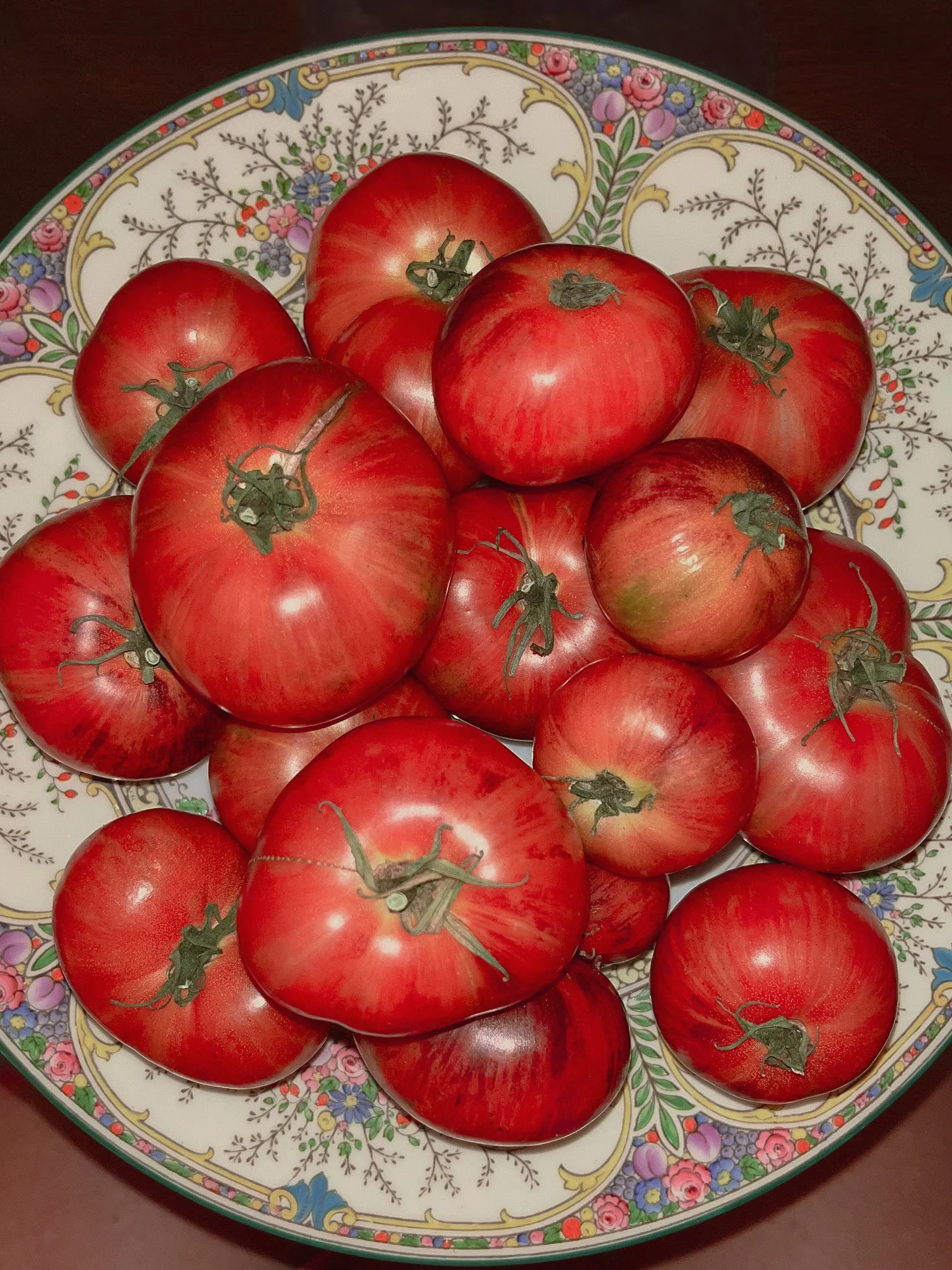
Heirlooms we grew.
Pink Zebras, super sweet and fun to grow.
Our Approach: Solutions for a Better Tomato Future
We believe in seasonal, local, and regenerative food systems. Our approach to tomatoes is about rethinking how we source, eat, and preserve them:
Eat in Season: Celebrate fresh tomatoes in the summer and preserved versions the rest of the year.
Know Who Grows Your Food: Support local farmers or grow your own.
Preserve at Their Peak: Use fermentation, drying, and canning to extend usability without environmental costs.
Rethink Processed Tomatoes: Make and freeze your own sauces or opt for high-quality, ethically sourced canned products.
Visit our Tomato Hub to explore what we learned firsthand—recipes, growing guides, and preservation techniques that transform how you experience this extraordinary fruit. If you're curious about our journey from seed to understanding—and why it matters—the full story continues below.

Sometimes the bounty is as big as your hand.

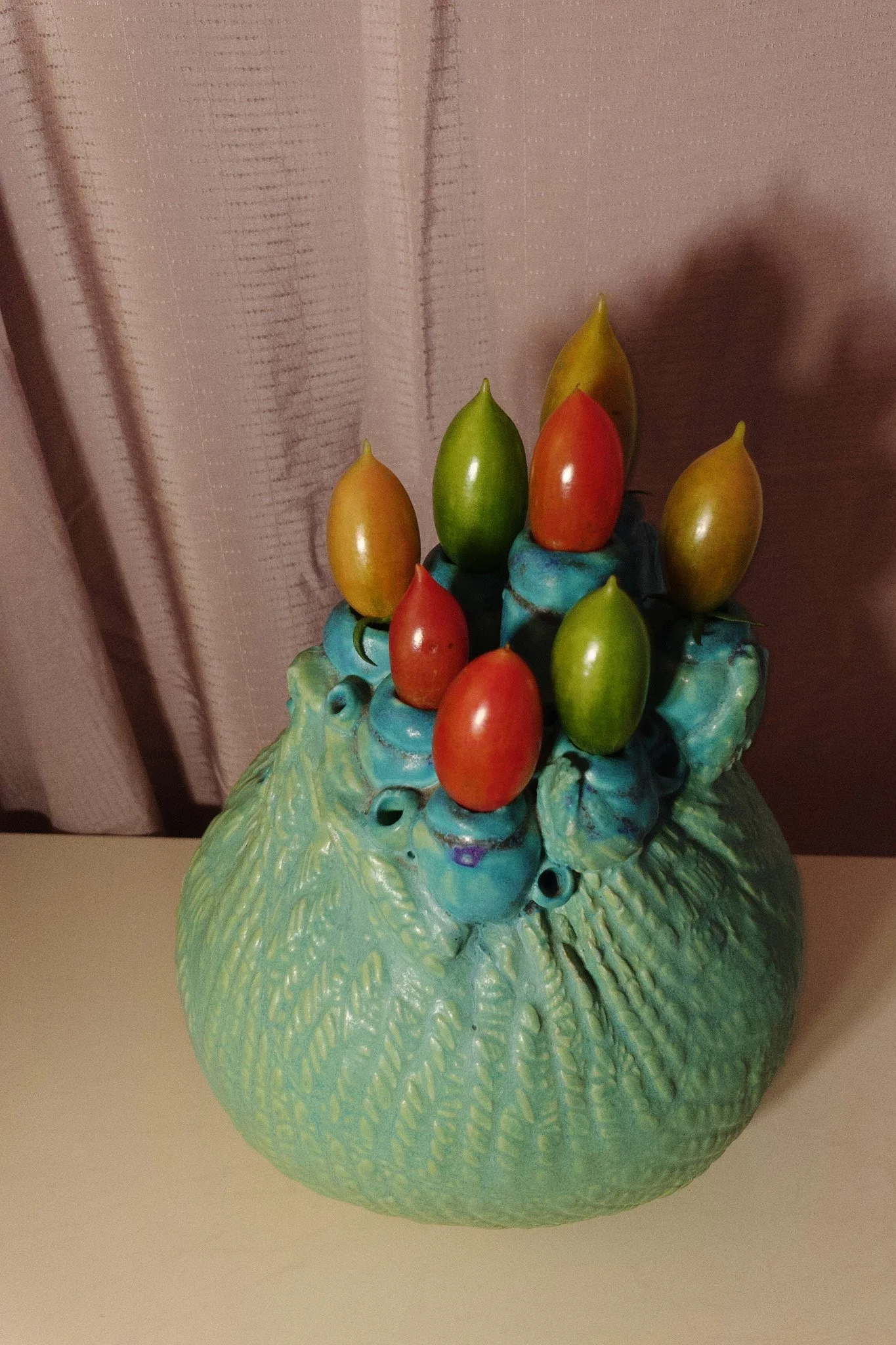
Grow these tini tiny tomatoes - they don’t transport well so they’re never in a farmers market or store.
Tomato: A Journey From the Andes to Your Plate
Tomatoes originated in Peru and Ecuador over 7,000 years ago and were later cultivated by the Aztecs in Mexico, who bred them into the larger varieties we recognize today. Spanish colonizers introduced tomatoes to Europe in the 16th century, and by the 18th century, they had become staples in Italian, Spanish, and Indian cuisines.
Tomatoes are a product of colonization—their global spread is intertwined with conquest, trade, and control.
The “Modern” Tomato Timeline
While tomatoes have been cultivated for thousands of years, the industrial transformation of this fruit has largely occurred in just the last sixty years. This rapid shift fundamentally changed not just how tomatoes are grown, but how we experience them as food.
This acceleration represents more than agricultural innovation—it reflects changing relationships with seasonality, flavor, and the very concept of what "fresh" means. The mechanical harvester didn't just replace human hands; it necessitated entirely new tomato varieties bred specifically for machine picking—varieties selected for durability and uniformity rather than taste or nutrition.
How big is the tomato business?
Tomatoes are a $195 billion global industry, with an estimated 180 million tons produced annually. Analysts project the market will reach $294 billion by 2032. The largest producers are China, India, Turkey, and the United States, with vast portions of the crop destined for processed goods. Roughly 65-75% of tomatoes consumed in the U.S. are processed—into ketchup, canned tomatoes, sauces, and pastes.
Who Grows and Eats Tomatoes?
Who Grows Them?
Smallholder farms: Italy, Mexico, and Spain maintain traditional growing methods, particularly for high-quality fresh tomatoes.
Industrial-scale monocultures: China and the U.S. dominate global production, relying on chemical inputs and intensive labor.
Hydroponic & greenhouse production: Countries like Canada and the Netherlands are increasing local supply more sustainably.
Who Eats Them?
Per capita consumption is highest in the Mediterranean, Latin America, and parts of Asia, where fresh tomatoes are dietary staples.
The U.S. and Europe lead in processed tomato consumption.
Emerging markets are seeing a rise in demand as processed tomato products become more widespread.
Perspective Shift: The average American consumes 31 pounds of processed tomatoes annually—the equivalent of nearly 100 cups of tomato sauce per person.
The Politics of Tomatoes
Tomatoes are deeply entwined with trade, labor, and global food power structures.
The NAFTA Effect: Since 1994, Mexico has become the primary fresh tomato supplier to the U.S., reshaping farming economies and labor structures.
The Italian Canned Tomato Scandal: Italy’s exports often rely on underpaid, undocumented laborers—highlighting deep exploitation in “premium” supply chains.
Florida vs. Mexico Trade Wars: U.S. growers have repeatedly lobbied for tariffs against Mexican imports, claiming unfair competition.
Corporate Consolidation: A few major players dominate seed patents, farming inputs, and processing infrastructure, often privatizing the fruits of publicly funded research.
For a deeper dive into the politics, history, and scale of processed tomato consumption in the U.S.—from ketchup to corn subsidies—read our companion piece on Art Brat: Is Your Ketchup Political?
A Better Way Forward

This isn't just about one fruit. The tomato exemplifies broader questions about our relationship with food systems, seasonality, and global trade. When we choose a sun-ripened heirloom in August or a carefully preserved sauce in January, we're participating in an alternative vision—one where flavor, health, and environmental well-being align rather than compete.
The most produced fruit on Earth deserves this reconsideration. Not as a year-round commodity stripped of its essence, but as a seasonal celebration—a food that connects us to place, time, and the extraordinary potential of deliberate choices. Because in the end, the tomato on your plate isn't just dinner it is a great opportunity for change.
OUR FOOD PHILOSOPHY
-
Our recipes prioritize whole, seasonal ingredients with high nutritional density - crafting vegetable-forward dishes rich in fiber and protein that celebrate vibrant modern global flavors. We source from producers and purveyors who share our commitment to local, regenerative, and sustainable food systems, complemented by ingredients from our own gardens. As a foundation for gut health, we layer fermentation and preservation techniques throughout our recipes while avoiding added sugars and heavily processed ingredients. We focus on ingredients you can pronounce and trace to their source.
-
We create, adapt, test, and photograph all recipes with minimal waste and maximum efficiency as a core principle. What you see is the actual dish - no artificial styling, no wasted food.
-
We developed and photographed this recipe or recipe adaptation and Hudson Valley-grown ingredients on the traditional and unceded territories of the Mohican, Munsee Lenape, and Esopus peoples, who have stewarded these lands since time immemorial.
-
We develop and adapt our recipes using ingredients and tools we grow, purchase and test ourselves. We occasionally evaluate products offered to us, with editorial decisions guided by our standards, not commercial considerations. Some links may generate commissions, but our recommendations stem from authentic experience and editorial conviction.



A crave-worthy, high-protein vegan curry that transforms green tomatoes into something rich, creamy, and deeply satisfying. Packed with fiber and layered with spice, this near-zero-waste recipe is one you’ll make again—next time, double it so you can freeze some.