The Cotton Project

A system reset in 400 miles, 22 acres, and one very good t-shirt.
What kind of world do you want to wear?
When you wear a t-shirt—something four billion people are doing right now—you’re likely wearing the outcome of an opaque, extractive system. One built to serve profit, not people. Designed to move quickly, hide impact, and reward volume over value.
Another T-shirt? That’s what it looks like—until you see what most brands won’t show. We’ve already mapped the system rarely reveal—cotton grown here, processed there, sewn somewhere else. A global relay race where complexity obscures resources, anonymizes labor, and rarely reflects the inputs in the end results. Our deep dive into the world the staus quo here.
Imogene + Willie’s Cotton Project is different. We don’t just mean “better.” We mean ground up restructured. Rooted. This project honors people, land, time, and outcome—on purpose. The Cotton Project is a proof point. And a provocation.
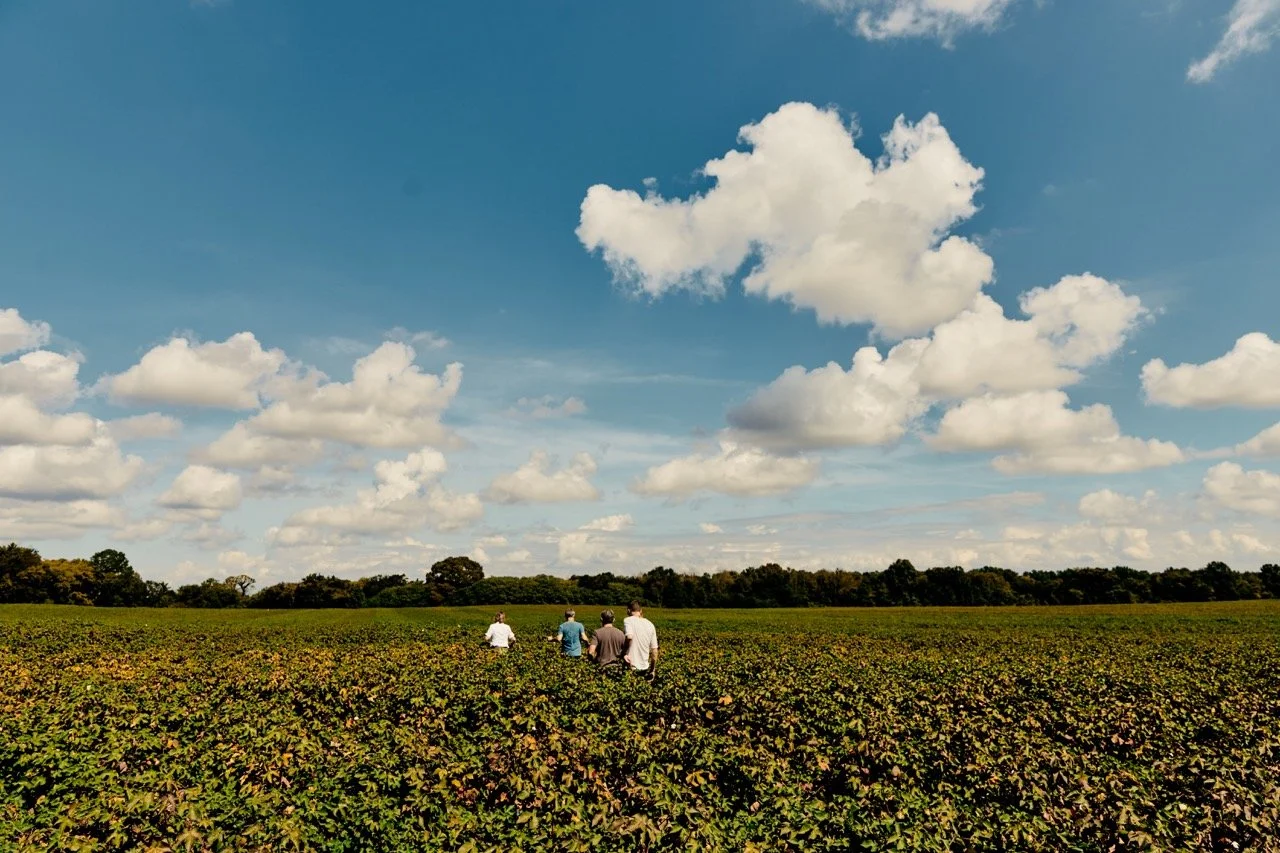
Image courtesy of Imogene + Willie
From Seed to Shirt — All Within a Region You Could Drive in a Day
Four years ago, Imogene + Willie began a quiet revolution. The idea was deceptively simple: to grow, gin, spin, knit, cut, and sew a t-shirt—all within a few hundred miles of their Nashville studio. To know every hand. To walk every part of the process. To ensure no one—and no resource—was shortchanged by industry norms.
They partnered with regenerative leader Larkin Martin, a seventh-generation Alabama farmer and policy strategist whose cotton fields aren’t just producing crops—they’re sequestering carbon and healing soil. Larkin cultivates more than cotton—she cultivates systems. With a foot in the field and a seat at the tables where policy and capital decisions get made, she translates across sectors: agriculture, economics, governance. Her farm is living proof that when regeneration meets long-term business logic, better outcomes follow—for everyone.
For the Cotton Project, Imogene + Willie committed to a 22-acre crop at Martin Farms—paying a premium to support regenerative practices and ensure fair compensation. Once harvested, that cotton was sent to Hill Spinning Mill in North Carolina, where owner Mark Leonard and his team paused all other production to run the fibers in isolation—preserving single-origin purity and avoiding cross-contamination.
That yarn then moved to Dignity Apparel in East Tennessee, where it was knit into fabric on vintage loopwheel looms—heritage machines that create a continuous, durable tubular knit. The fabric’s structure is shaped here: dense but breathable, with weight and softness that comes from the process itself, not from finishes. Dignity then cut and sewed the tees engineered to hold their form and improve with wear.
The result isn’t only a garment. It’s a signal. A proof case that the extractive norm is a conscious choice—not a necessity.
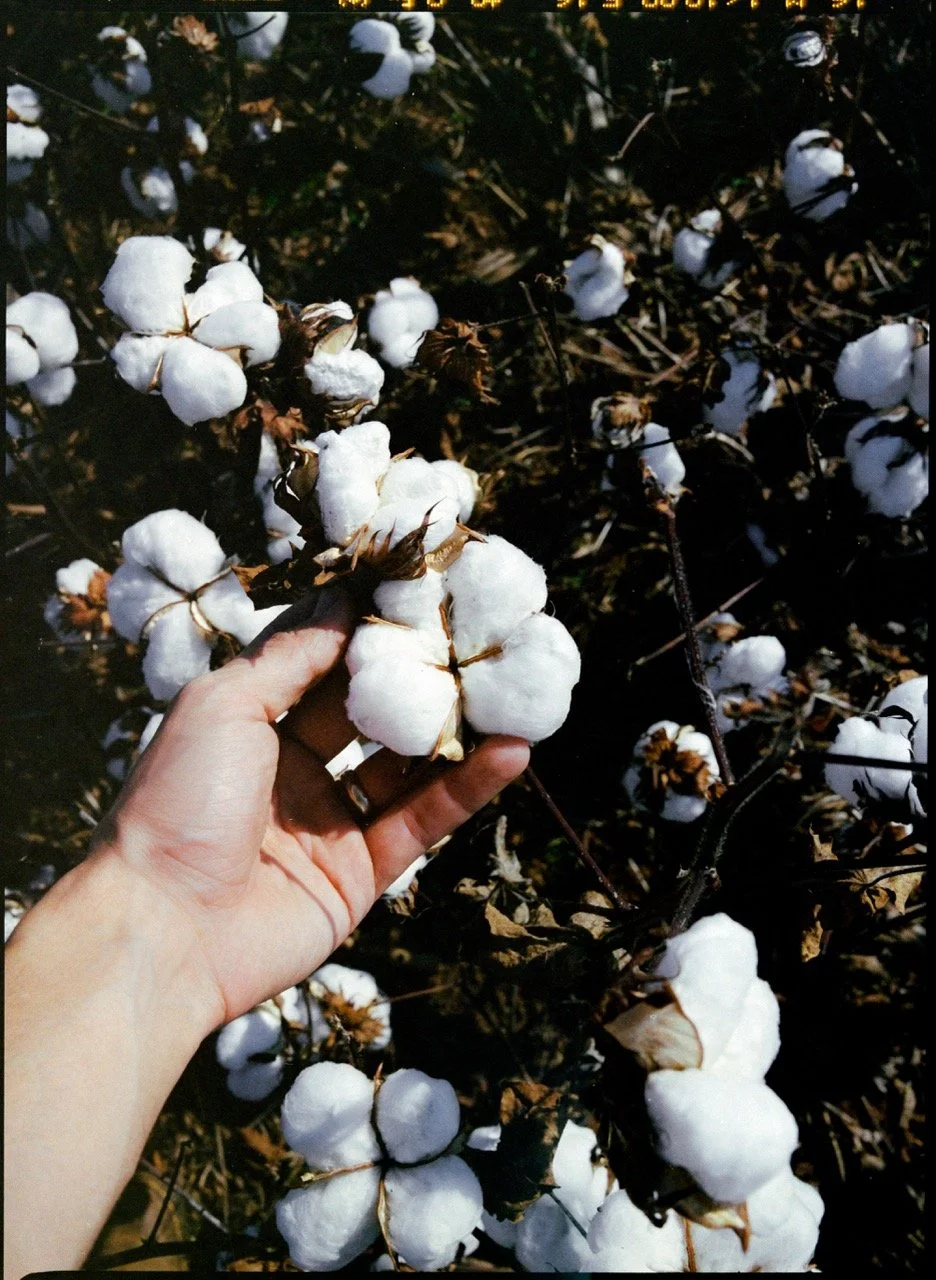
Image courtesy of Imogene + Willie
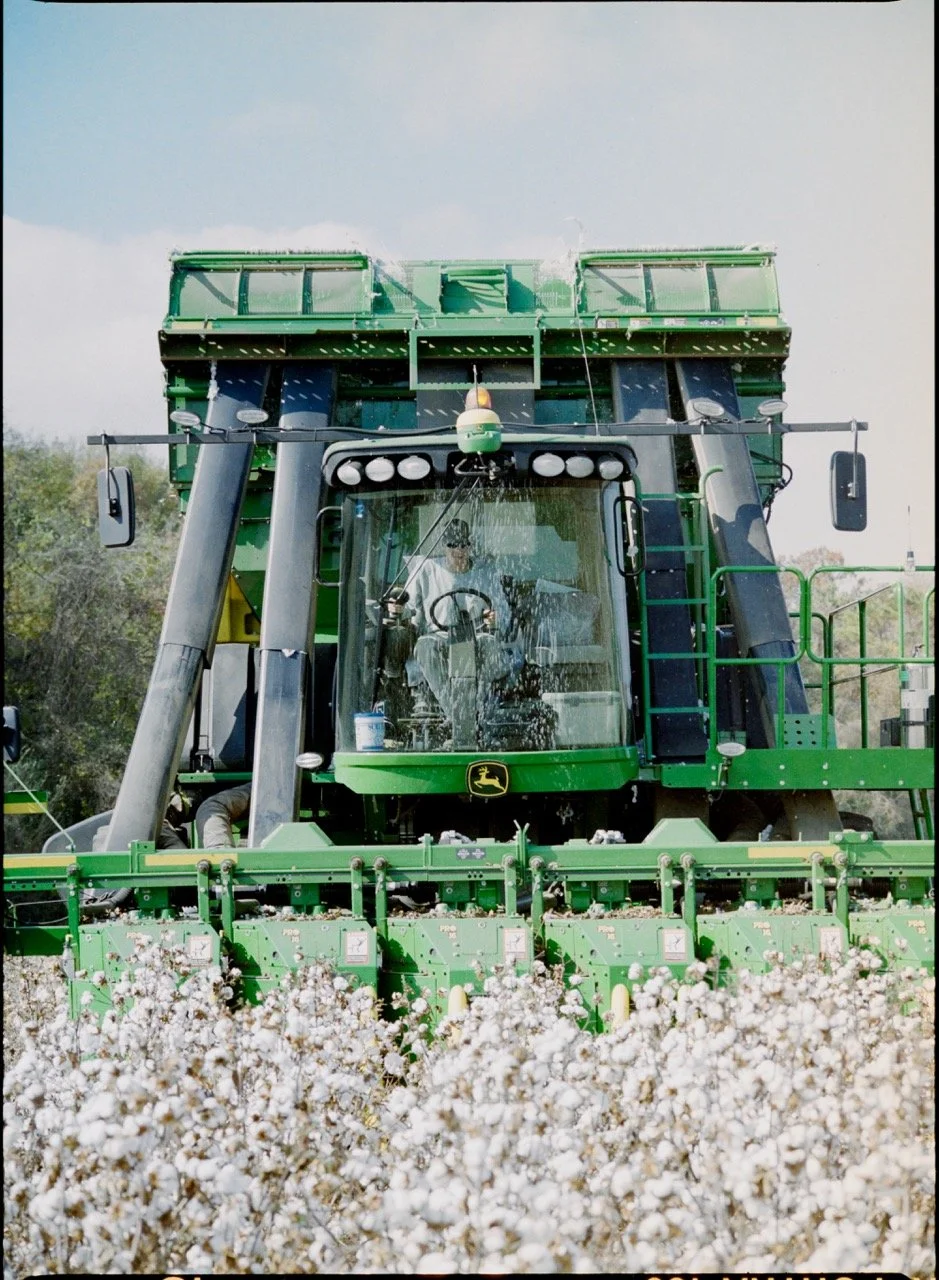
Image courtesy of Imogene + Willie
It’s a Great T-Shirt. Then You Learn What Makes It Extraordinary.
This isn’t a conceptual art piece—it’s a t-shirt you’ll want to wear. The fit is exceptional. The fabric feels substantial and soft. The colorways—faded black and vintage white—were chosen as a conscious nod to how this shirt is meant to live with you, not just on you. There’s no fake distressing. Just timeless tones designed to age beautifully, not temporarily.
The loopwheel process gives the body of the shirt its tubular shape, eliminating side seams and creating a smoother drape that moves with you. It’s the t-shirt equivalent of selvage denim—slow to make, longer to perfect, but built to evolve. Not performative, considered.
This is where function meets feeling. Not just what it means. What it is.
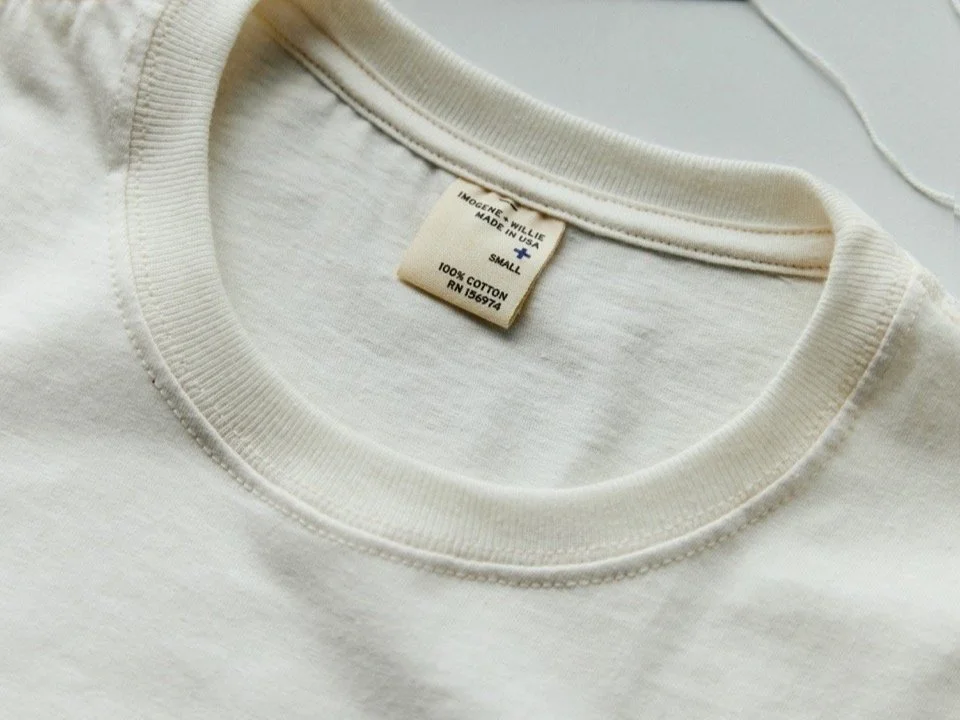
Image courtesy of Imogene + Willie
“When a system externalizes its true costs, everyone pays. The worker. The planet. The product itself.”
What the Usual Path Doesn’t Tell You
The global t-shirt supply chain is like a remodel done wrong. You’ve hired five contractors in five cities, none of whom talk to each other. You get delays. Compromises. Confusion. And in the end, you’re handed the keys to something that could’ve been great—but wasn’t.
The Cotton Project moves differently. Everyone’s in the room. The outcome is tighter. More human. More clear.
Why Isn’t The Cotton Project the Industry Norm?
Because the current system hides its breakdowns. It’s not transparent—and it’s not accidental. It’s structured to keep consumers out of the loop, to keep choices narrow, and to prioritize financial efficiency over everything else.
Imogene + Willie didn’t just show this kind of domestic, regenerative, transparent production was possible—they showed it’s viable. Financially. Systemically. Culturally. The Cotton Project is priced in line with their existing tees and other brands in the space—but it’s delivering something far greater in value. It proves the regenerative path can be the new norm. And the extraction model the exception.

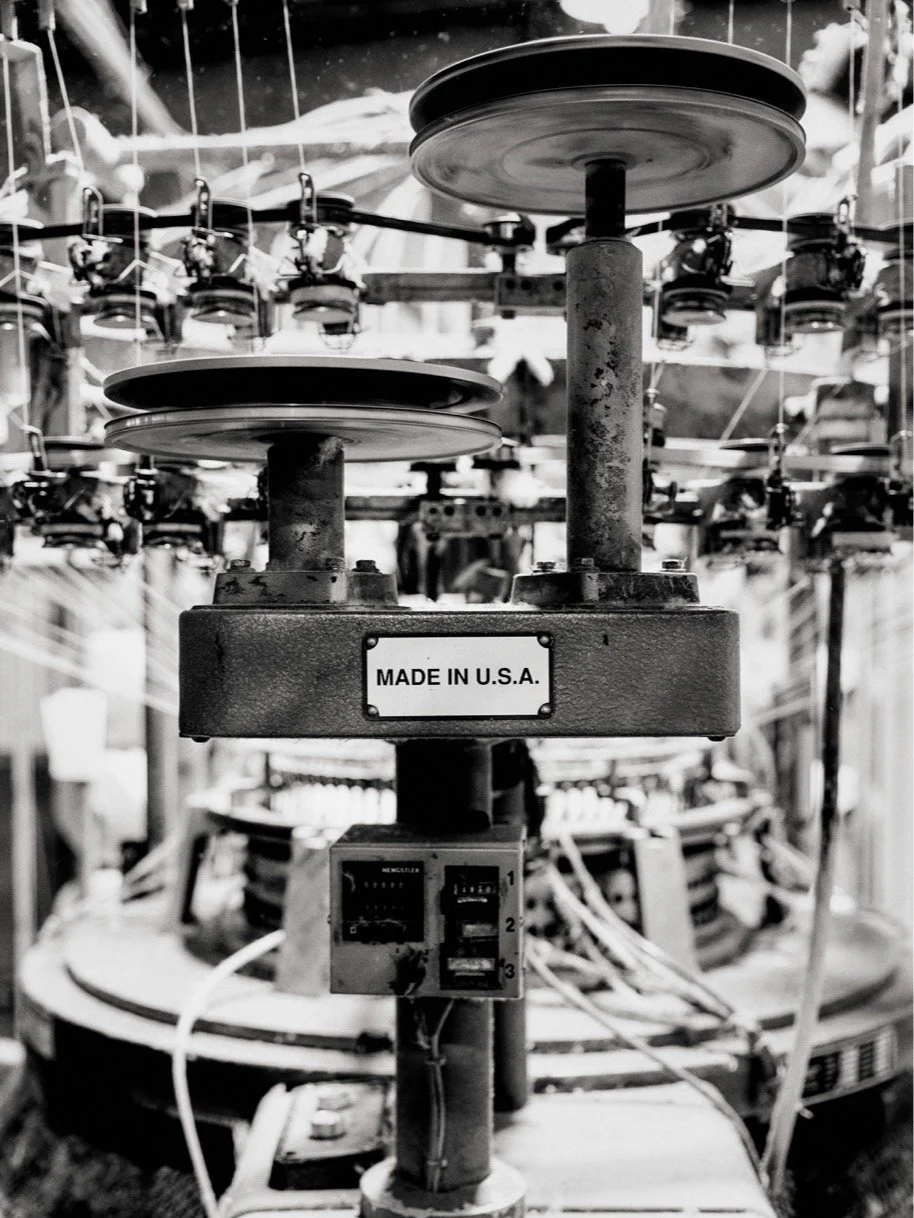
Image courtesy of Imogene + Willie
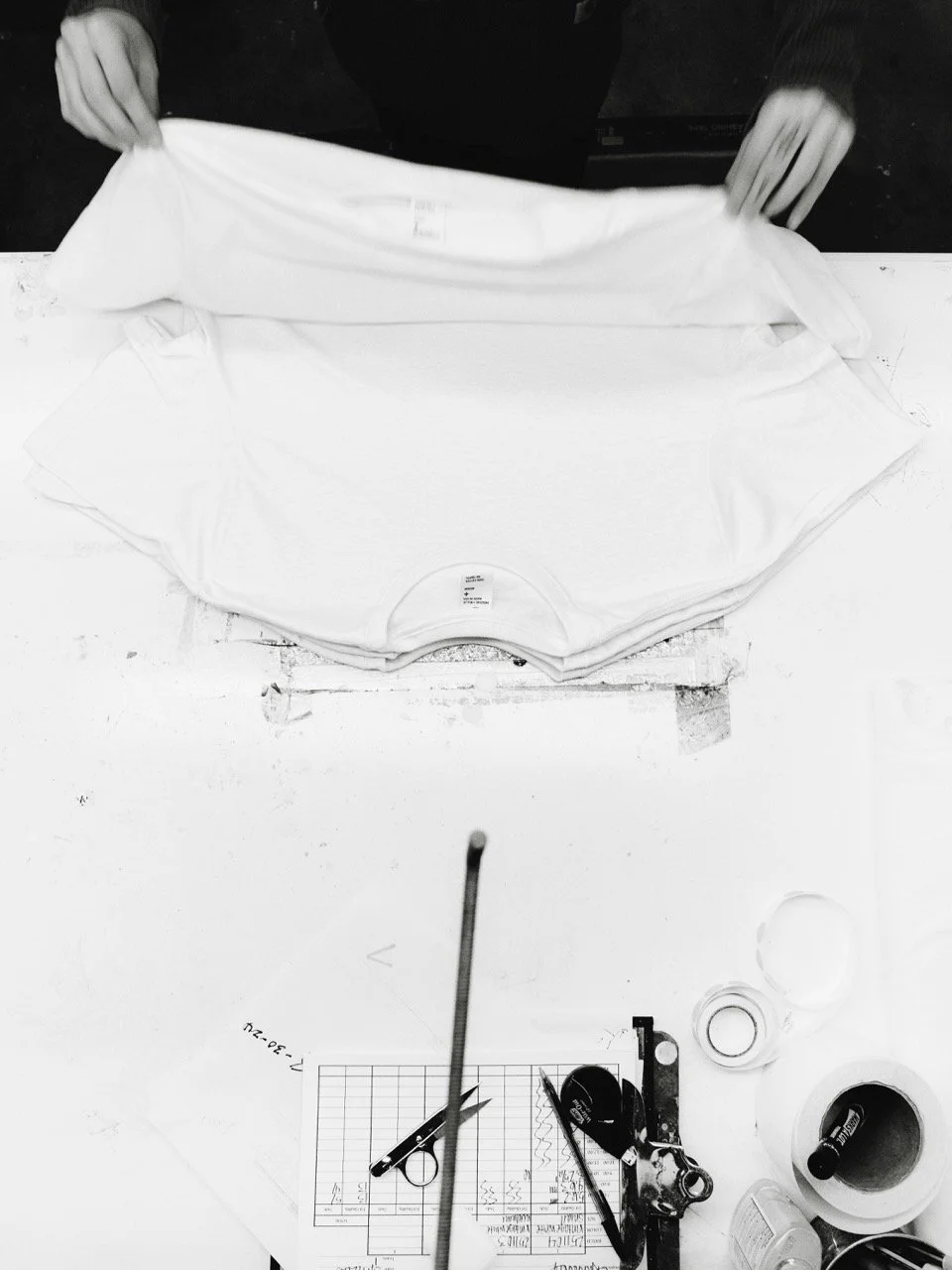
Image courtesy of Imogene + Willie
“We think of the wearer as the birth of the product’s life—not the end.”
This shift in focus changes fashion’s ability to be a part of the solution rather than the problem. You’re not just buying a product. You’re continuing a system. One that builds instead of extracts. One that proves there’s a better way—and shows what happens when we choose it
When I asked the team at Imogene + Willie what stood out most over the four years it took to bring this project to life, their answer was immediate: “The relationships we’ve built with our trusted partners were essential to its success.”
From designer to farmer to spinner to sewer to seller to you—every hand in this system knows the others. That’s the difference. That’s the loop. People and relationships are the foundation of how regenerative systems come to life.
This is the kind of world we want to wear. It’s possible. And with projects like this—it’s already happening.