Rethinking the Roll
Toilet paper represents a perfect case study for how small, consistent choices catalyst substantial positive impact. The average American uses approximately 141 rolls annually—a decision rarely examined critically amid powerful industry advertising, retail placement strategies, cultural norms, and the tyranny of convenience.
For decades, I remained loyal to Cottonelle—seduced by its design and function. I subscribed to it, stockpiled it, and justified this choice to myself even as I transformed other aspects of my consumption. It became one of the last holdouts in my otherwise conscientious household.
The journey toward finding a more sustainable alternative proved challenging. Early eco-friendly options presented a familiar dilemma: environmentally responsible but functionally disappointing. The compromises felt too significant—cardboard-like textures, questionable durability, or prohibitive pricing created barriers that maintained the status quo.
Then I discovered Reel Paper—bamboo-based, plastic-free packaging, and offering performance that rivals conventional premium brands. The shift was surprisingly easy—no looking back, just moving forward to address the next challenge and if you come visit me chances are I’ll send you away with a roll to test out.
Before we dive into the data: if you just want the solution, purchase directly from Reel Paper or find it at Target. We’ve given careful thought to why we still recommend certain brands they carry—you can read our stance here.
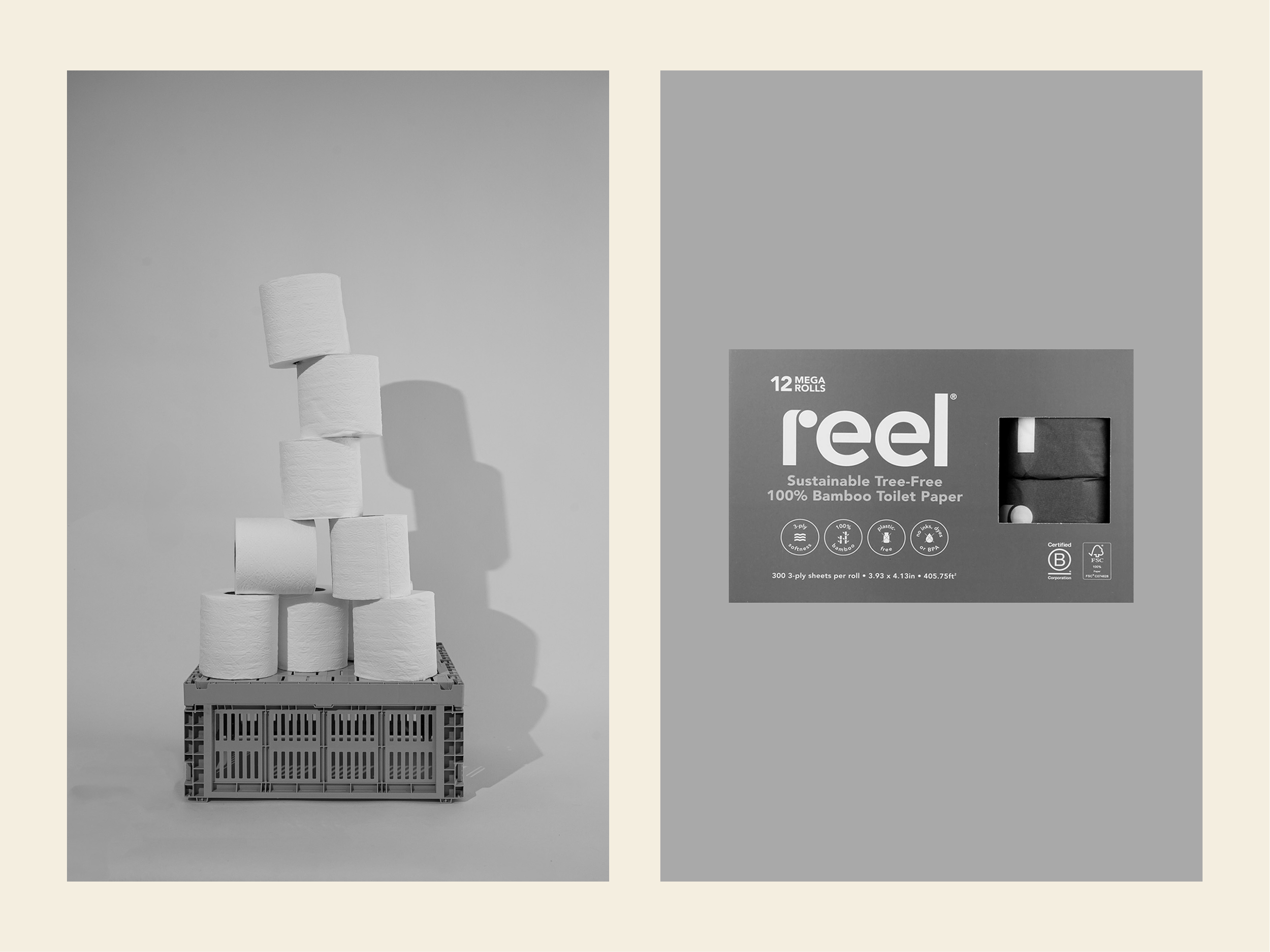
What makes bamboo revolutionary as a paper source is its remarkable growth rate—some species grow up to 3 feet in 24 hours—making it one of the planet’s most rapidly renewable resources. Unlike trees, which can take decades to regrow, bamboo regenerates from its own root system, requiring no replanting and minimal resources.
The scale of this seemingly mundane decision is staggering:
In 2024, the global toilet paper market reached $55.44 billion, and projections show it growing to $74.95 billion by 2033.
Americans make up just 4.2% of the world’s population yet consume about 30% of global toilet paper production.
A single American uses 141 rolls annually—the highest per capita consumption, outpacing other high-consuming nations like Germany 134 rolls and the UK 127 rolls.
The toilet paper industry in the U.S. alone cuts down about 31 million trees annually.
The electricity required to produce America’s annual toilet paper consumption—78 million MWh—exceeds the entire yearly electricity usage of New Jersey.
These statistics represent more than abstract environmental metrics. They reflect ingrained consumption patterns that have profound cumulative effects. The conventional toilet paper industry’s reliance on virgin wood pulp fuels deforestation, water pollution, excessive water usage (~37 gallons per roll for conventional brands), and carbon emissions.
The comparison between Cottonelle (C) and Reel Paper (RP) illustrates the potential for meaningful change:
Material Source: Virgin wood pulp (C) contributing to deforestation versus bamboo (RP) a renewable resource.
Water Usage: ~37 gallons per roll (C) versus approximately 30% less (RP)
Energy Requirements: ~1.3 kWh per roll (C) versus significantly lower due to bamboo’s natural efficiency (RP)
Packaging: Plastic (C) versus recyclable cardboard (RP)
Carbon Impact: High (C) deforestation + emissions versus low (RP) carbon-sequestering bamboo
What’s compelling about this comparison is how it demonstrates that sustainable alternatives can deliver comparable performance without asking consumers to sacrifice comfort—often the most significant barrier to adoption of eco-friendly products.
Reel Paper isn’t perfect—no single product is. Bamboo sourcing, manufacturing processes, and corporate structures all present complexities. But the pursuit of better solutions remains more valuable than the paralysis of seeking perfect ones.
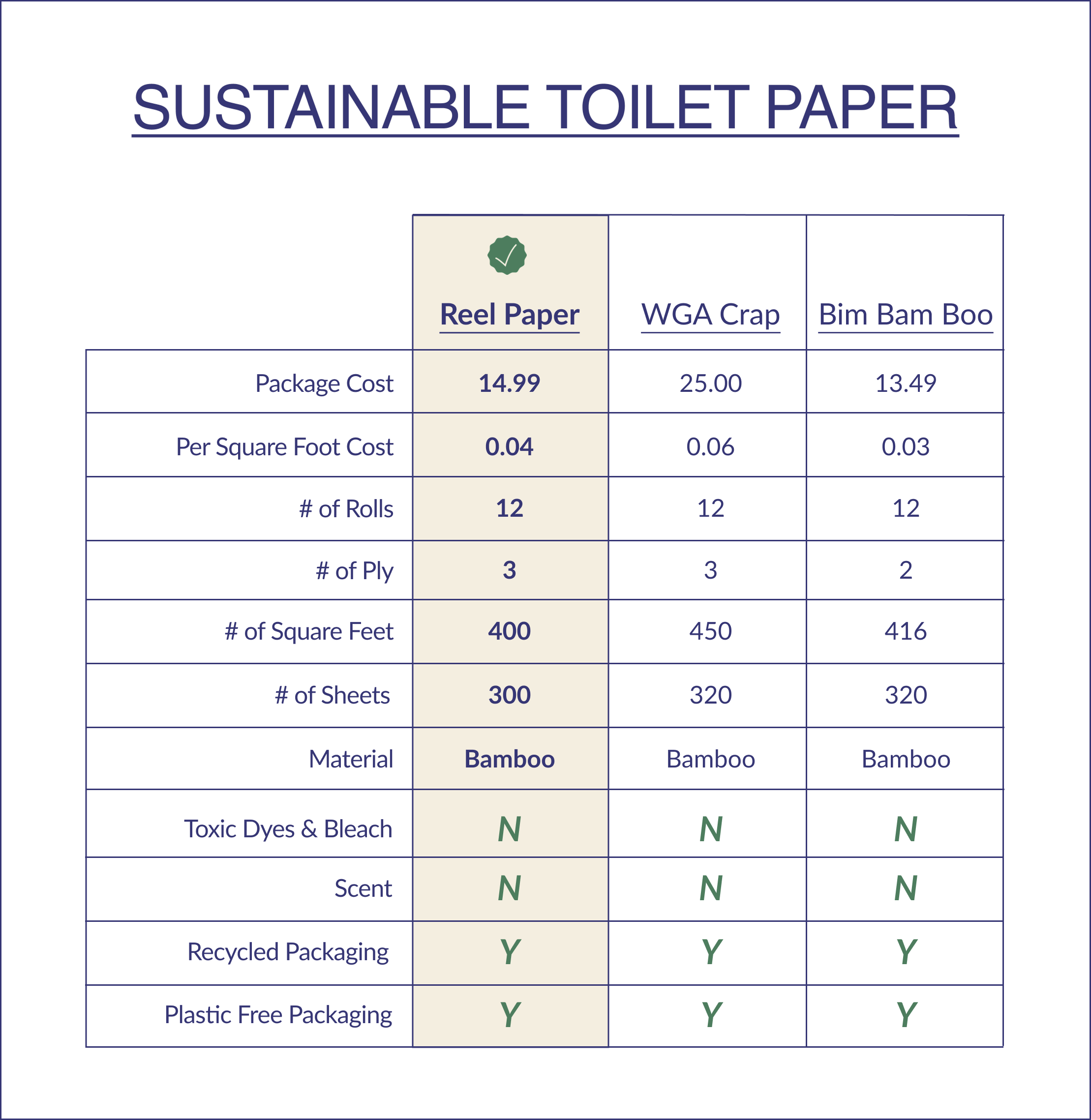
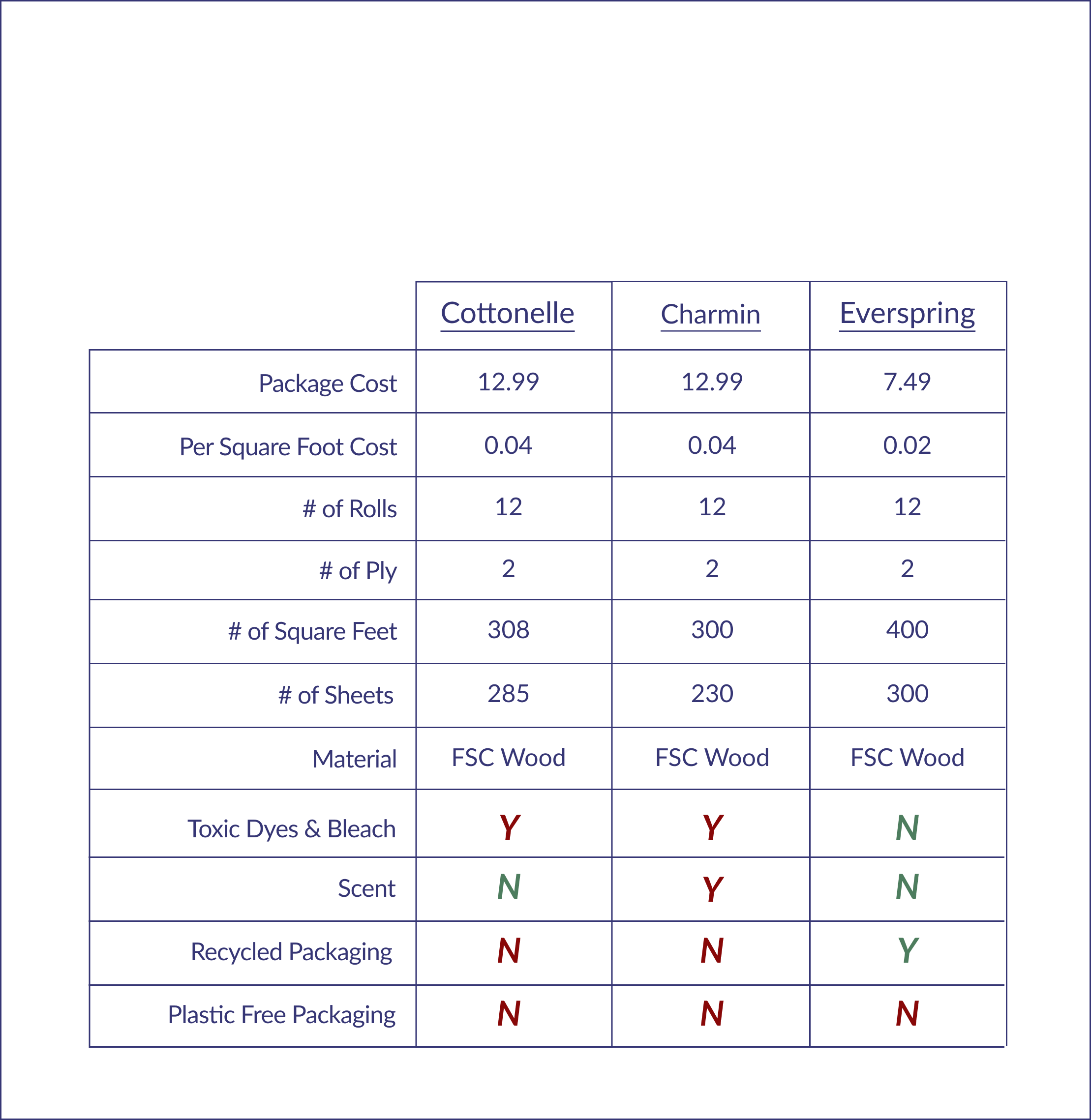
This isn’t just about toilet paper. It’s about recognizing that transformation happens in the spaces we least expect—that revolution can begin in the most private moments of our daily lives. We’ve broken down the details in our comparison chart for those who want to see the numbers, and for a more personal perspective, try the calculator below to measure your own impact. A simple switch can be a compelling reminder that our individual choices, while small in isolation, create ripples that extend far beyond ourselves when compounded.
Calculate Your Environmental Impact
Your Estimated Impact
Based on average consumption data and comparative resource usage between
conventional and bamboo-based toilet paper.
-
This story was developed independently using product we purchased ourselves. No sponsorships, gifted products, or affiliate links are included.
-
IMARC Group - Toilet Paper Market Size, Share and Research Report
Grand View Research - Toilet Paper Market Size & Share | Industry Report, 2030
Research and Markets - Toilet Paper Market Report and Forecast 2025-2034
Mongabay - Toilet paper: Environmentally impactful, but alternatives are rolling out
Minnesota Technical Assistance Program - Water Use in Pulp & Paper Mills
LinkedIn Article - Carbon Sequestration Using Bamboo Trees -
This story was developed and photographed in the Hudson Valley on the traditional and unceded territories of the Mohican, Munsee Lenape, and Esopus peoples, who have been stewards of these lands since time immemorial.