
CASE STUDY - EVERLANE
Everlane's Broken Promises
This week Shein announced it is acquiring Everlane from private equity giant L Catterton for approximately $100 million. The deal carries roughly $90 million in debt, with common stockholders receiving nothing. The brand founded in 2011 by Michael Preysman on the premise that fashion needed to change, that built its identity on "radical transparency" — a phrase it trademarked — has been sold to the company most synonymous with the opposite of everything it claimed to stand for.
The party line is calling this ironic. It was not ironic. This end was a core feature, not the bug. Let's follow the money.
Every time you sell a t-shirt you actually have to make the t-shirt.
I have spent decades in fashion designing, producing and selling products, and have sat across the table from the founders, operators, investors, journalists and consultants who shaped the last few decades of how clothes get designed, made and sold. I have been watching Everlane from inside the industry since the day they posted their first cost breakdown, a $15 crewneck tee with $6.70 in disclosed production cost, set against their self-proclaimed industry norm of $50. The math, for anyone who actually knew the math, did not quite add up. But the breakdown was novel, and novelty in 2011 was enough. Enough to attract investment from top tier tech and consumer VC's like Kleiner Perkins, Lerer Hippeau, Andreessen Horowitz, and Maveron. Enough to put a 25-year-old former private equity associate with no known fashion sector experience on magazine covers as the future of ethical clothing.
Preysman's premise was valid. Pricing in fashion was opaque. Markups were and still are theatrical. Consumers deserved to know more. Everlane's pitch was a genuinely useful provocation to an industry that needed one, to the mass vertical brands the end consumer recognizes (Gap, J.Crew, Banana, Old Navy) and to the private label monoliths the industry knows by name, the offshore production consolidators that have powered department store labels and the now seemingly never-ending influencer-brand grift pipeline.
Executing on this vision was a different challenge. Delivering the SaaS margins tech investors were used to within an apparel business is structurally impossible, because "product" that is an actual physical thing doesn't have a long tail of mining data or diminishing need for infrastructure. Every time you sell a t-shirt you actually have to make the t-shirt. The distance between the promise and the math appears to have been closed with round after round of growth capital, venture money raised against the story, not the economics. A repeating cycle of financing buoyed by the story, which meant the story had to keep getting bigger to justify the next, even larger, valuation. By 2020, L Catterton, the $40 billion private equity firm LVMH holds a sizable minority stake in, led an $85 million Series F at a $550 million valuation. By 2022, the company had taken on $90 million in debt. By 2024, Preysman had stepped away to sell magnesium powder under the tagline "for those who play the long game."
This week, the company was sold to Shein for less than the debt it carried. This appears to have played out as a classic venture capital to private equity pump-and-dump. They invest, extract, trade liabilities, add a layer of insurmountable debt and then hollow out the brand and sell it for parts.
Were the promises ever possible?
The promises seem real. They were just never possible inside the financial model the company was built inside.
Plastic-free by 2021. They got to 90%, then 98%, then extended the deadline, then re-framed the brand as "clean luxury." One hundred percent GOTS-certified organic cotton by 2023. They got to 75%. The right of workers to be represented in their supply chain. They laid off their own customer experience team four days after the union asked for recognition. Forty-two of fifty-seven CX workers gone. Replaced with offshore teams that hold far less power to organize.
These brand promises turned out to be credit lines drawn against future authenticity that never had to be repaid. The pledges did their jobs the moment they were announced. They justified the next round, the next press cycle, the next year of "we're different." When the pledges failed to deliver, the consequence was a press release, a recalibration, a pivot to "clean luxury." The money had already been raised and spent. Consumers had already bought the tee or jeans or sweater.
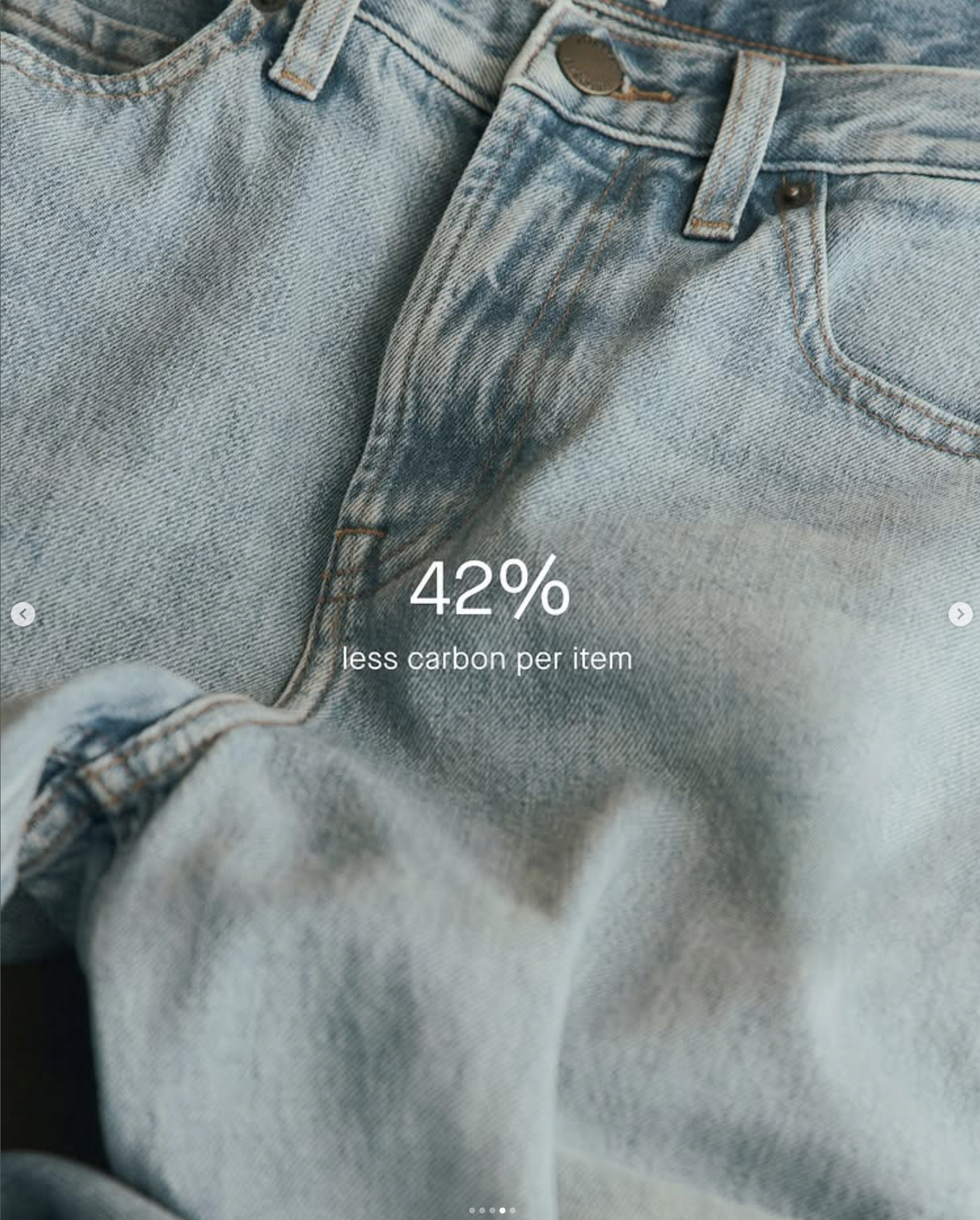
The money game.
Everlane raised approximately $176 million in disclosed funding rounds and took on another $90 million in debt. Across the same fifteen years, based on public reporting and projections of revenue and customer acquisition norms in the DTC cohort, the company likely transferred multiples of that amount to Meta and Google in advertising spend alone, and that is just two necessary strategic partners. The SaaS infrastructure stack, the real estate, the agencies, the consultants, the freight forwarders, the payment processors, the analytics platforms, the influencer programs. Each of those is its own budget line, each one a tech company or service provider with its own investor ecosystem, and many of them backed by funds that overlap with the funds that backed Everlane.
Peer brand Casper's 2019 IPO filing disclosed over $400 million in marketing spend across three years, the publicly documented version of what every brand in this cohort was doing privately. The DTC boom — Warby, Casper, Allbirds, Everlane, Glossier, Away and dozens more all funded in the 2011 to 2015 window — maps almost exactly to Meta's mobile ad revenue ramp under Sheryl Sandberg, who had brought her ad monetization playbook from Google and was rebuilding Facebook around it. Public markets did not believe the ad monetization story when Facebook IPO'd in 2012. The stock collapsed by more than half within four months. What rescued it was advertiser demand at scale, validating the surveillance monetization thesis that turned both Meta and Google from “free” content platforms into the trillion-dollar surveillance monopolies they are today. The DTC brand cohort was a meaningful piece of that demand. The brands kept the customer data they were buying, the platforms kept the data they were selling, and the investors who funded both sides got paid on all sides of the trade. It's worth nodding to the idea that these newsy DTC brands also bolstered spend from legacy and multinational brands, fueling cultural credibility to the platforms that translated to ad spend from the big players.
This is its own brand of insider trading and market manipulation in everything but the legal definition. It is legal. It is not what the SEC regulates. But the people pricing the trades are the people profiting from both sides of them, and the people paying the bill at the end are not the people who got rich along the way. The investment in these brands was in some ways an insurance policy. A way to convert venture capital into revenue for the rest of the ecosystem the same investors were positioned across. Whether the brand itself succeeded was almost beside the point as we have seen play out almost universally over the last decade.
L Catterton, with LVMH money sitting behind it, was the last clean station on this line. Shein is the dumpster the body landed in.
The villain is the system.
Not Preysman. Not L Catterton. Not Shein. Not even linear capitalism. The villain in this case is the specific interlocking architecture and the way it incentivizes everyone to look the other way for their own personal gain. Investors, founders, executives, platforms, press, conferences, analysts, LPs, lawyers, boards. The architecture that allowed paint to be mistaken for foundation for fifteen years. The press ran the founder profiles and took the ad spend. The investors profited from the markups and the secondary sales and the next fund. The platforms collected the customer acquisition dollars. The publications handed out the awards. The boards signed off. The system worked exactly as designed.
What we ended up with, fifteen years on, is the now seemingly inevitable outcome: tech oligarchs, a warming planet, and more expensive less-good stuff across the board.
Opacity is the necessary operating norm.
Everlane is a story whose receipts came due this week. Quince is running the same playbook with a Shein-adjacent supply chain and an Everlane-adjacent aesthetic, funded by the same ecosystem. The ultra-fast-fashion cohort, Shein itself, Cider, Temu, the next ten you have not heard of yet. This system has spread well beyond fashion into food, wellness, home, beauty, hospitality. Anywhere the gap between the story and the math can be closed with a close-knit circle of venture capital and private equity backed brands and services, the pattern repeats. Because of the opacity.
Everything Everlane promised is being built. Just not by Everlane.
We are not destined to have a future determined by a few brands that failed. The bright spot is that everything Everlane promised and failed to deliver is now happening, increasingly at scale, across every sector, globally. Regenerative agriculture. Patient capital. Living-wage manufacturing. Carbon-negative production. Repair and resale and circular economy infrastructure built into the model from day one.
All of this is being built by people who watched what was promised, watched what was delivered, and decided to actually do the work needed to bridge the chasm between the two. A new generation of founders engages with what they don't know and how they can build on the rails that already exist while still envisioning an entirely different future. Maybe that future has fewer individual billionaires. Maybe the silver lining in all this opacity and greed sold as transparency and equality will be a world that is meaningfully richer overall for the failure of Everlane and the conversation that comes from its spectacular crash landing.
The power is yours.
Customers, founders, farmers, executives, investors, students, dreamers. You are the power.
The system that produced Everlane required your belief to keep running. The system that is producing what comes next requires your attention, your purchases, your investments, your work, your refusal to keep mistaking paint for foundation.
Help the builders. They are building what Everlane never was.
Our rating for EVERLANE now that Shein owns them.

Extractive. Linear. Exploitative.
Brands and organizations prioritize profit over people and planet. They are opaque and take without giving back, often exploit workers and communities, and damage ecosystems. No matter how convenient or affordable, they don't deserve your support.
Examples of category adjacent brands proving it's possible to do more at all levels of the market in around the world.
Imogene & Willie – Committed to American manufacturing throughout their line, with their Cotton Project showcasing complete US supply chain transparency from regenerative cotton to finished garment. Repair, repurchase, and recycle programs in place.
Asket – Permanent collection model (no seasons) with lifetime warranty, repair service, published cost breakdowns, and full traceability for every product.
Sheep Inc. – Carbon-negative merino production with NFC tags tracking every garment back to the specific farm and sheep.
KowTow – Fair trade certified using 100% organic and renewable fibers with full supply chain transparency from seed to garment.
Industry of All Nations – Fair trade artisan partnerships globally with transparent pricing showing exactly where money goes in the supply chain.
KOTN – Direct-to-farmer model supporting Egyptian cotton farmers, building schools and infrastructure, full supply chain transparency.
More on style
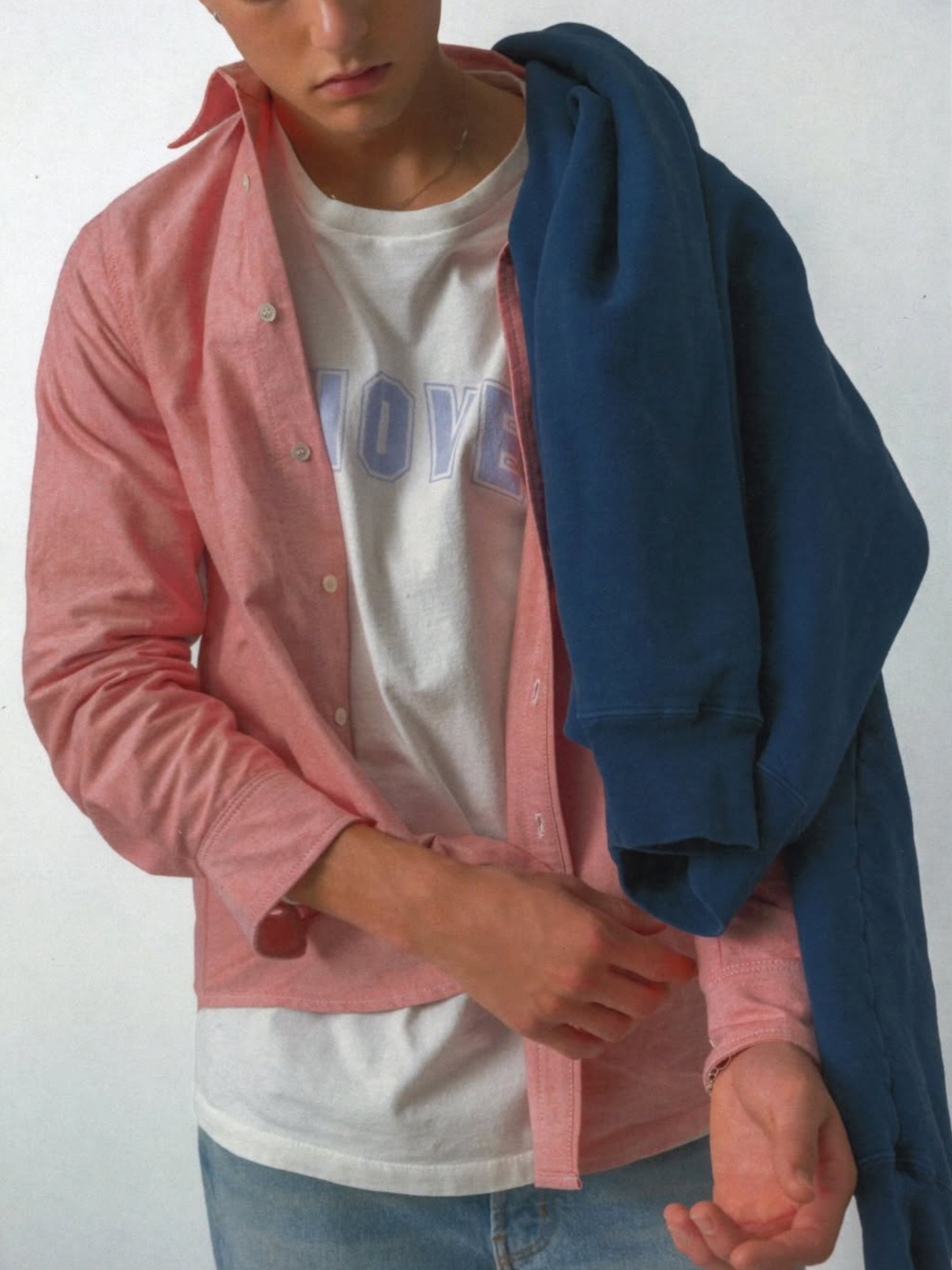


A different kind of ambition. Fireside Pilates and Next Season's hand-knit deadstock merino Sporty Top — eight hours per piece, customer-chosen colorway, built to be repaired and eventually reknit. Three women quietly redefining what luxury, scale, and success look like in 2026.