GUIDE—Lacto Fermentation

Lacto-Fermentation at Home
A garnish, a snack, a solution
The Foundation—What Is Lacto-Fermentation?
Lacto-fermentation is nature's original preservation method. Beneficial bacteria (primarily Lactobacillus) naturally present on vegetables convert sugars into lactic acid, creating an environment that preserves food while developing complex, tangy flavors and beneficial probiotics.
Every lacto-ferment follows this simple pattern: Fresh Vegetables + Salt Brine + Time = Probiotic Preserve
Equipment You Need
Our go to lacto fermentation kit by Le Parfait. We swear by this tool because it's big enough for a proper batch and it's contained, no need for a pile of jars and weights and wondering if you've got everything submerged. We use one kit to make 2-3 ferments per month—an elevated, nutritious way to save money and reduce food waste while building a full larder of gut-friendly flavor bombs with minimal effort.
Food Scale - the one we use by Escali more on why here
Sea salt (non-iodized) we use Jacobsen Pure Kosher Salt
Filtered water
Additional jars with lids to transfer completed ferments to before you start the next. We use Le Parfait when we’re not up-cycling from ones that land in our world.
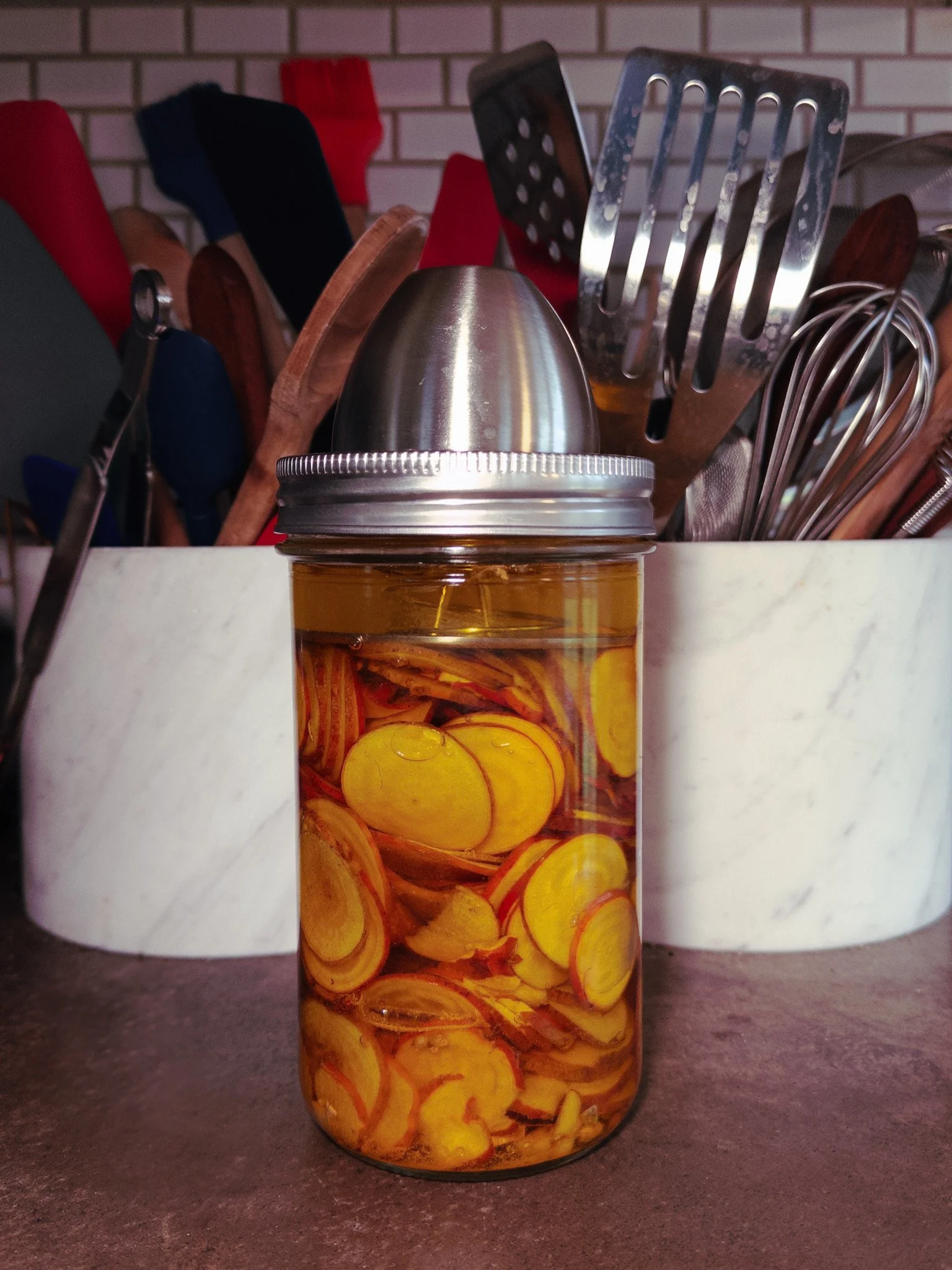
The Process
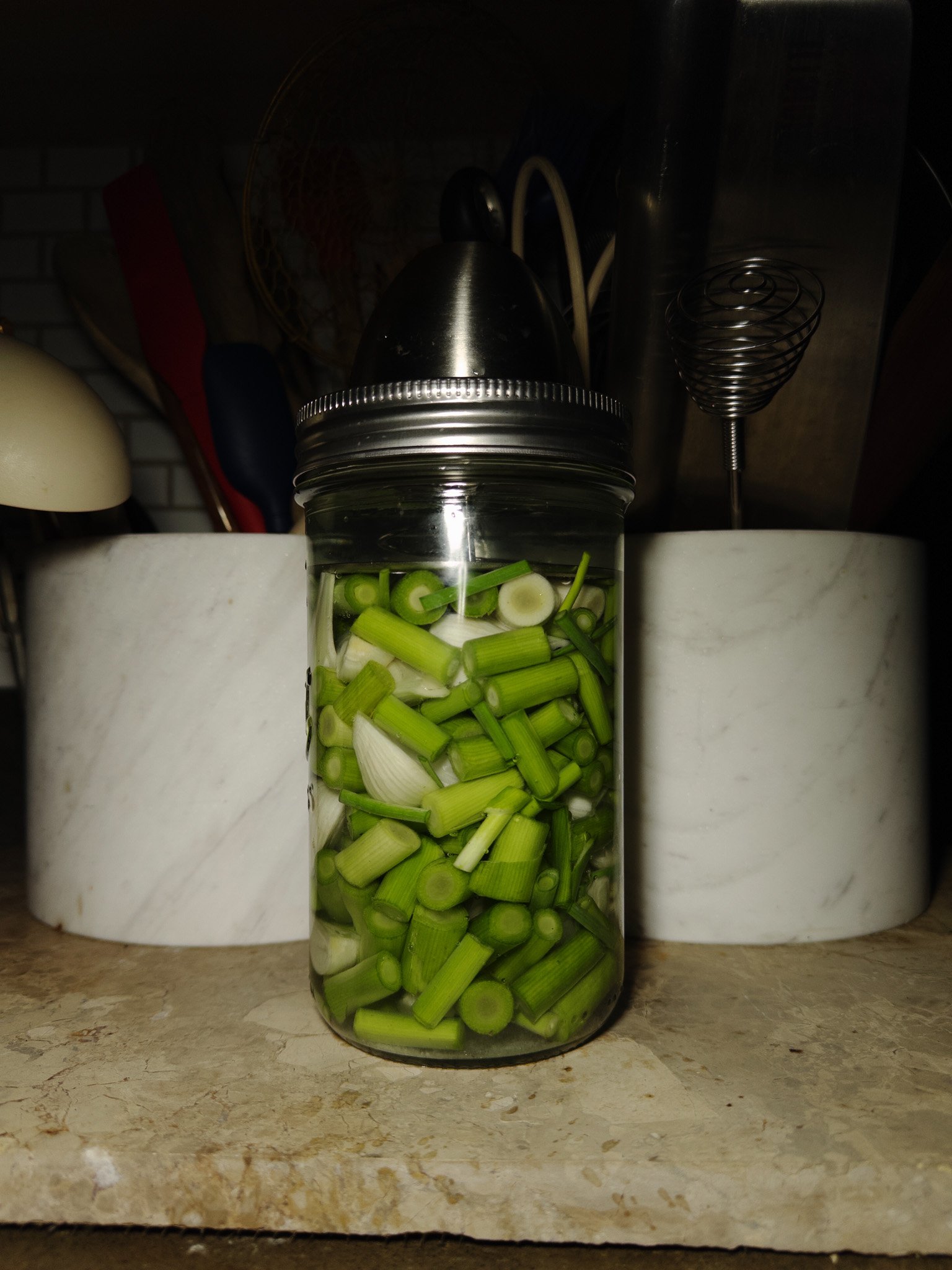
Step 1: Prepare (15-30 minutes)
Clean vegetables thoroughly
Cut to desired size (thinner = faster fermentation)
Weigh your vegetables, then calculate 2% of that weight in salt Example: 400g vegetables = 8g salt (about 1½ teaspoons) No scale? Quick estimate: 1 pound vegetables = 2 teaspoons salt
Make salt brine: Dissolve this salt in enough filtered water to cover the vegetables. Taste test: Should taste like pleasant seawater - salty but not overwhelming
Choose aromatics (optional): herbs, spices, citrus peel
Step 2: Ferment (3-14 days)
Pack vegetables in clean jar
Add aromatics if using
Cover with brine, leaving 1-inch headspace
Weight down to keep vegetables submerged
Ferment at room temperature (65-75°F/18-24°C)
Taste daily starting day 3-14
Step 3: Store (months to years)
Refrigerate when desired flavor is reached
Keep submerged in brine
Use clean utensils always
Enjoy the probiotics and flavor!
Universal Signs of Success
Bubbling activity during fermentation
Tangy, sour aroma (never putrid)
Crisp texture maintained
Cloudy brine (this is normal and good!)
Personalize and Experiment
How to Get Your Custom Recipe
Now that you understand the basic principles, you can create endless variations! Use this prompt to get a personalized fermentation recipe. Copy, paste, populate with your details in an AI tool - Claude.ai is our favorite used in moderation due to the scope of environmental impact of LLM’s and their energy consumption:
PROMPT:
I'd like a custom lacto-fermentation recipe.
Here's what I'm working with:
VEGETABLES I HAVE: [List your vegetables - be specific about quantities if known]
SEASON/LOCATION: [Your current season and general location for seasonal guidance]
SALT PREFERENCE: [Standard 2% / Lighter 1.5% / Stronger 2.5%]
FLAVOR PREFERENCES: [Any specific flavors you love or want to avoid]
DIETARY NEEDS: [Any specific requirements - high protein, extra fiber, etc.]
EXPERIENCE LEVEL: [Beginner/Intermediate/Advanced with fermentation]
SPECIAL REQUESTS: [Anything specific - faster fermentation, longer shelf life, particular use, etc.] Please create a complete recipe following the same comprehensive format as the golden beet example.


-
Our recipes prioritize whole, seasonal ingredients with high nutritional density - crafting vegetable-forward dishes rich in fiber and protein that celebrate vibrant modern global flavors. We source from producers and purveyors who share our commitment to local, regenerative, and sustainable food systems, complemented by ingredients from our own gardens. As a foundation for gut health, we layer fermentation and preservation techniques throughout our recipes while avoiding added sugars and heavily processed ingredients. We focus on ingredients you can pronounce and trace to their source.
-
We create, adapt, test, and photograph all recipes with minimal waste and maximum efficiency as a core principle. What you see is the actual dish - no artificial styling, no wasted food.
-
We developed and photographed this recipe or recipe adaptation and Hudson Valley-grown ingredients on the traditional and unceded territories of the Mohican, Munsee Lenape, and Esopus peoples, who have stewarded these lands since time immemorial.
-
We develop and adapt our recipes using ingredients and tools we grow, purchase and test ourselves. We occasionally evaluate products offered to us, with editorial decisions guided by our standards, not commercial considerations. Some links may generate commissions, but our recommendations stem from authentic experience and editorial conviction.